Quick answers
History
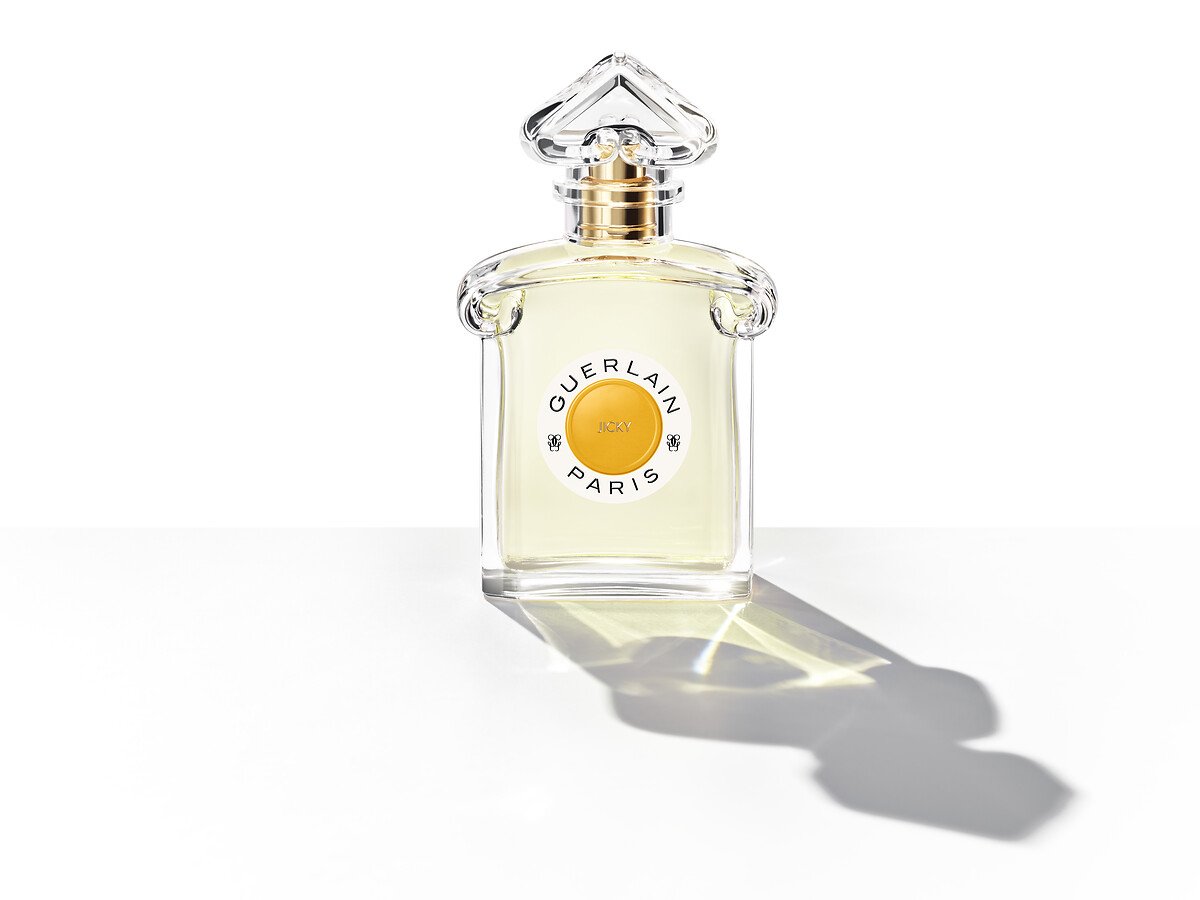
Jicky was composed in 1889 by Aimé Guerlain, second-generation perfumer of the Guerlain family, for the eponymous Parisian house founded by his father Pierre-Francois-Pascal Guerlain in 1828. The nickname Jicky is a personal reference of the perfumer, most often associated with a young woman of his acquaintance, though the house has never confirmed a single canonical origin.
Jicky is the first modern perfume. The historical significance does not lie in the launch year alone, but in the structural choice. Aimé Guerlain anchored the base on three synthetic raw materials newly available to perfumers at the end of the nineteenth century: vanillin (isolated in 1874), coumarin (synthesized in 1868) and synthetic linalool. Before Jicky, commercial perfumery relied almost exclusively on natural distillation and extraction. By integrating laboratory molecules into the formula, Guerlain shifted perfumery from a craft of botanical reproduction toward a composed art capable of effects beyond what nature alone could provide.
The commercial reception in 1889 was uneven. The abstract, animalic-ambery character of Jicky disconcerted many female buyers used to soliflore compositions. The perfume found its early audience among men, who wore it openly through the 1890s and 1900s, and remained predominantly a masculine choice until the 1920s, when emancipated female buyers reclaimed Jicky as a unisex statement perfume.
More than a century later, Jicky is still in production at Guerlain. The composition has been reformulated several times to comply with IFRA restrictions, in particular on civet, but the structural identity remains. Luca Turin and Tania Sanchez awarded Jicky five stars in Perfumes: The Guide, the English-language reference of fragrance criticism, describing it as a foundational work that still reads as modern. Jicky is also the founding composition of the so-called Guerlinade, the in-house signature accord built on bergamot, vanilla, tonka, rose, jasmine and iris that recurs through the Guerlain catalog. The olfactory pyramid and profile below describe the version sold today, reformulated over time while preserving the original signature; the 1889 creation is recounted in the History section above.
Fragrance notes
The pyramid below reflects the version currently on the market; the 1889 original is described in the History section above. The architecture of Jicky is aromatic, fresh on top and powdery-ambery on the drydown. Aimé Guerlain composed an abstract structure in which natural extracts coexist with synthetic anchors, a configuration unprecedented in commercial perfumery in 1889.
Evolution on skin tells the story Aimé Guerlain composed. The lavender-bergamot opening reads almost like an eau de cologne for the first thirty minutes. The heart then turns powdery as the orris and jasmine come forward with the rose. The base develops slowly into a warm vanilla-tonka skin scent, with the civet animalic facet softened in modern reformulations but still audible on the drydown.
Scent profile
The olfactory profile of Jicky articulates an aromatic-hesperidic opening, a powdery floral heart and a warm ambery drydown into a deliberately abstract signature. The opening is fresh and lavender-forward, anchored by bergamot and rosemary. The heart settles on the powdery combination of orris and jasmine, with a fresh facet of rose. The base settles on tonka bean and vanilla, with opoponax and amber rounding the warmth, and the animalic facet of civet adding the slightly indecent character that defined the 1889 reception.
The distinctive signature rests on the abstraction itself. Where contemporary perfumes of 1889 still tried to reproduce a single flower or a single material, Aimé Guerlain composed an accord that smelled like no single ingredient. That deliberate abstraction is the conceptual leap that marks the birth of modern perfumery.
Jicky is the moment perfumery stopped trying to copy nature and started composing with it. More than a century on, it still reads as modern.
Key characteristics
When and where to wear
Within the heritage catalog of Guerlain, Jicky is a signature scholarly perfume. Its aromatic-ambery character reads as elegant and a touch retro to contemporary wearers, with a distinctive powdery sweetness that signals heritage perfumery to anyone who recognizes the codes.
How to wear it
Seasonal fit
| Season | Fit | Critical notes |
|---|---|---|
| Spring | ★★★★ | The hesperidic opening reads beautifully on mild spring days. |
| Summer | ★★☆☆ | The vanillin-coumarin base can feel heavy in high heat. |
| Autumn | ★★★★ | A reference season for the powdery ambery drydown. |
| Winter | ★★★★ | Excellent in cool dry air, where the tonka and vanilla anchor properly. |
Context fit
| Setting | Fit | Wearing recommendation |
|---|---|---|
| Office | ★★★☆ | Refined and present, dose with restraint in shared spaces. |
| Formal evening | ★★★★ | A natural setting for the heritage register. |
| Intimate dinner | ★★★★ | Where the animalic facets of the base read warm and elegant. |
| Travel | ★★★☆ | A versatile travel choice across temperate climates. |
| Sport | ★☆☆☆ | Mismatched register. |
| Cultural outing | ★★★★ | Concerts, museums, opera: a fitting heritage scent. |
Similar perfumes
Five compositions share an aesthetic kinship with Jicky through the aromatic lavender register, the powdery ambery register or the historical Guerlinade lineage.
| Perfume | House · year | Why related |
|---|---|---|
| Shalimar | Guerlain · 1925 | Signed by Jacques Guerlain, who extended the Jicky base into a full ambery oriental and gave the Guerlinade its definitive form. |
| Mouchoir de Monsieur | Guerlain · 1904 | A more masculine companion piece to Jicky, signed by Jacques Guerlain on the same lavender-ambery template. |
| Fougere Royale | Houbigant · 1882 | Earlier coumarin pioneer that prefigured the fougere family; Jicky pushed the synthetic logic further. |
| Pour un Homme | Caron · 1934 | Lavender-vanilla aromatic ambery that builds on the structural template Jicky introduced. |
| Habit Rouge | Guerlain · 1965 | Modern Guerlinade-anchored composition that translates the Jicky-Shalimar lineage into a hesperidic-leather statement. |
Frequently asked questions
See also
Sources
- Guerlain: official Jicky product page (accessed 22 May 2026)
- Smithsonian Magazine: history of Jicky and the birth of modern perfumery (accessed 22 May 2026)
- Now Smell This: detailed review of Jicky and the Guerlinade lineage (accessed 22 May 2026)
- Kafkaesque: vintage versus modern Jicky comparative review (accessed 22 May 2026)
- Kafkaesque: longevity and sillage reading
- MyOrigines, authorized retailer: Jicky L'Extrait 30 ml page, which also lists the 75 ml eau de parfum (accessed 12 September 2026)