Quick answers
History
extrait de musique is the collection Filippo Sorcinelli devotes to his first source of inspiration: organ music. An initial formulation had translated the stops of the great organ of Notre-Dame Cathedral into olfactory matter; in 2026, presented at the Esxence show in Milan, the collection is reborn in a new guise, as a union of sound and scent across seven new fragrances. The house premise is clear: a sound transforms a place, and a perfume can preserve that transformation.
ORGAN #1 is its first movement. The scene is a side chapel, set apart from the great nave. An oblique light falls on vases filled with gladioli; their fragrance carries an intimate memory, tied to specific seasons of a life, to hands arranging flowers, to a silence inhabited by expectation. In that chapel, the gladiolus becomes an emblem of respect and elevation.
The perfume is also an autobiographical confession. The sound of the organ in this space recalls, for Sorcinelli, the Saturday afternoons when the church was being made ready, when the child followed his mother as she came to clean. The accord translates that moment through a bright, soaring floral note, sustained by a green, faintly earthy base that evokes the dampness of the chapel and the cool breath of stone.
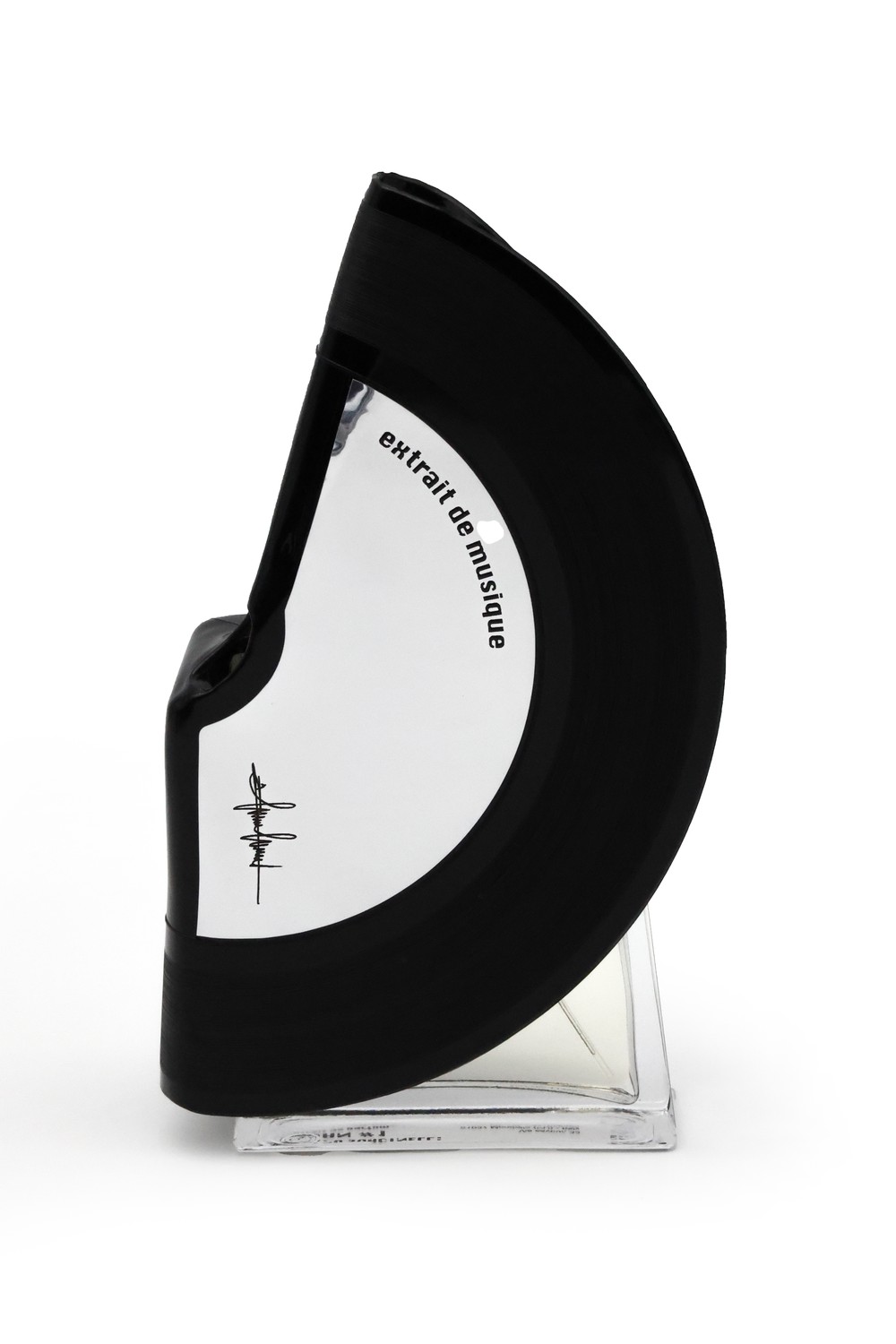
The collection carries that memory into its very bottle. The starting point is vinyl, a symbolic and biographical material: it was on 33 rpm records that Filippo Sorcinelli first heard organ music, in his bedroom, during the 1980s. Subjected to heat, the vinyl loses its rigidity, bends, melts and adheres to the glass to become a stopper. Seven organ improvisations, cut on a record, accompany the seven fragrances.
Olfactory pyramid
Filippo Sorcinelli is an organist; he does not conceive his perfumes as a pyramid of volatility but as a score. ORGAN #1 is therefore stated in three movements, subject, counter-subject and tail, as the house publishes them.
Saffron and ebony give the floral a spiced, dark footing; tuberose and orange blossom rise in full light, softened by suede; elemi, bergamot and a smoky veil recall the chapel's mineral coolness. The movement runs from floor to vault, like the oblique light of the story.
Olfactory profile
ORGAN #1 is a floral that rises. Tuberose and orange blossom form its luminous heart, but the house keeps them clear of any sweetness: saffron lends a leathery, spiced thread, ebony a woody shadow. This is far from a decorative floral; it is a church flower, held by stone.
The base makes all the difference. Beneath the flowers runs a green, earthy and faintly smoky accord, where cypriol and smoky accents evoke the cool dampness of the chapel and the breath of stone. That contrast between floral brightness and mineral coolness is the perfume's signature: a flower set on a cathedral floor.
Suede softens the edges and gives the sillage a caressing texture, while elemi and bergamot keep the whole airy. ORGAN #1 is worn the way one steps into a chapel on a Saturday afternoon: the light is low, the flowers keep watch, and something very old rises gently upward. Longevity is that of an extrait, the sillage present yet gathered.
“The sound of the organ in this space recalls the moments when the church was prepared on Saturday afternoons, when I accompanied my mother as she cleaned the church.”Filippo Sorcinelli, on ORGAN #1
Key characteristics
When and where to wear
ORGAN #1 is a floral for the shoulder seasons and low light. Its green brightness blooms in spring and autumn, in daylight as much as late afternoon, in moments of recollection as well as cultural outings. Its smoky base also lets it hold cool evenings; in high summer, the tuberose is best dosed with measure.
Usage markers
Seasonal fit
| Season | Fit | Critical notes |
|---|---|---|
| Spring | ★★★★ | Its prime season, the flower rises in full light. |
| Summer | ★★★☆ | Fine brightness; dose the tuberose. |
| Autumn | ★★★★ | The green, smoky base reaches full measure. |
| Winter | ★★★☆ | The flower warms grey days. |
Context fit
| Setting | Fit | Usage recommendation |
|---|---|---|
| Recollection | ★★★★ | Its vocation, a church flower. |
| Cultural outing | ★★★★ | Concert, museum, a held floral. |
| Ceremony | ★★★★ | Luminous and dignified at once. |
| Daytime | ★★★☆ | A clear floral, never loud. |
| Evening | ★★★☆ | The smoky base carries the night. |
Similar perfumes
The church floral, bright and mineral, has few equals; you approach it through its tuberose neighbors or the other chapters of the collection.
| Perfume | House · year | Why it is close |
|---|---|---|
| ORGAN #2 · Easter Day | Filippo Sorcinelli · 2026 | The next chapter of the extrait de musique collection; the triumphant Easter organ where ORGAN #1 murmurs a side chapel. |
| Quando rapita in estasi | Filippo Sorcinelli · 2019 | The house's incense floral, lily of the valley and incense; another flower carried by the sacred. |
| Carnal Flower | Frederic Malle · 2005 | The great reference for carnal tuberose; to set against the mineral restraint of ORGAN #1. |
Common questions
See also
Sources
- Filippo Sorcinelli press kit, extrait de musique collection, Esxence 2026 (ORGAN #1 text and vinyl packaging)
- Filippo Sorcinelli Fragrances 2026 press kit (history of the extrait de musique collection)
- Filippo Sorcinelli, official extrait de musique page
- Filippo Sorcinelli, official house site