Quick answers
History
extrait de musique is the collection Filippo Sorcinelli devotes to his first source of inspiration: organ music. An initial formulation had translated the stops of the great organ of Notre-Dame Cathedral into olfactory matter; in 2026, presented at the Esxence show in Milan, the collection is reborn in seven new fragrances, as a union of sound and scent. The house premise is clear: a sound transforms a place, and a perfume can preserve that transformation.
ORGAN #3 is its third movement, and the most material. Beyond the choir loft, beyond the keyboards, there exists a space that rarely enters one's gaze: the engine room. The light is harsh and functional, the surfaces bear the marks of use, the air holds a constant warmth. Its smell speaks of metal, of heated dust, of oil coursing slowly through the mechanisms and keeping the bellows under tension.
Before the sonic majesty, before the solemnity that fills the vaults, there is a complex system of levers, turbines and air ducts that generate pressure and transform energy into sound. Musical ecstasy originates in this machinery. When the organ resounds in the church, the sound appears pure and transcendent; here, among the engines, one understands the genesis of that purity.
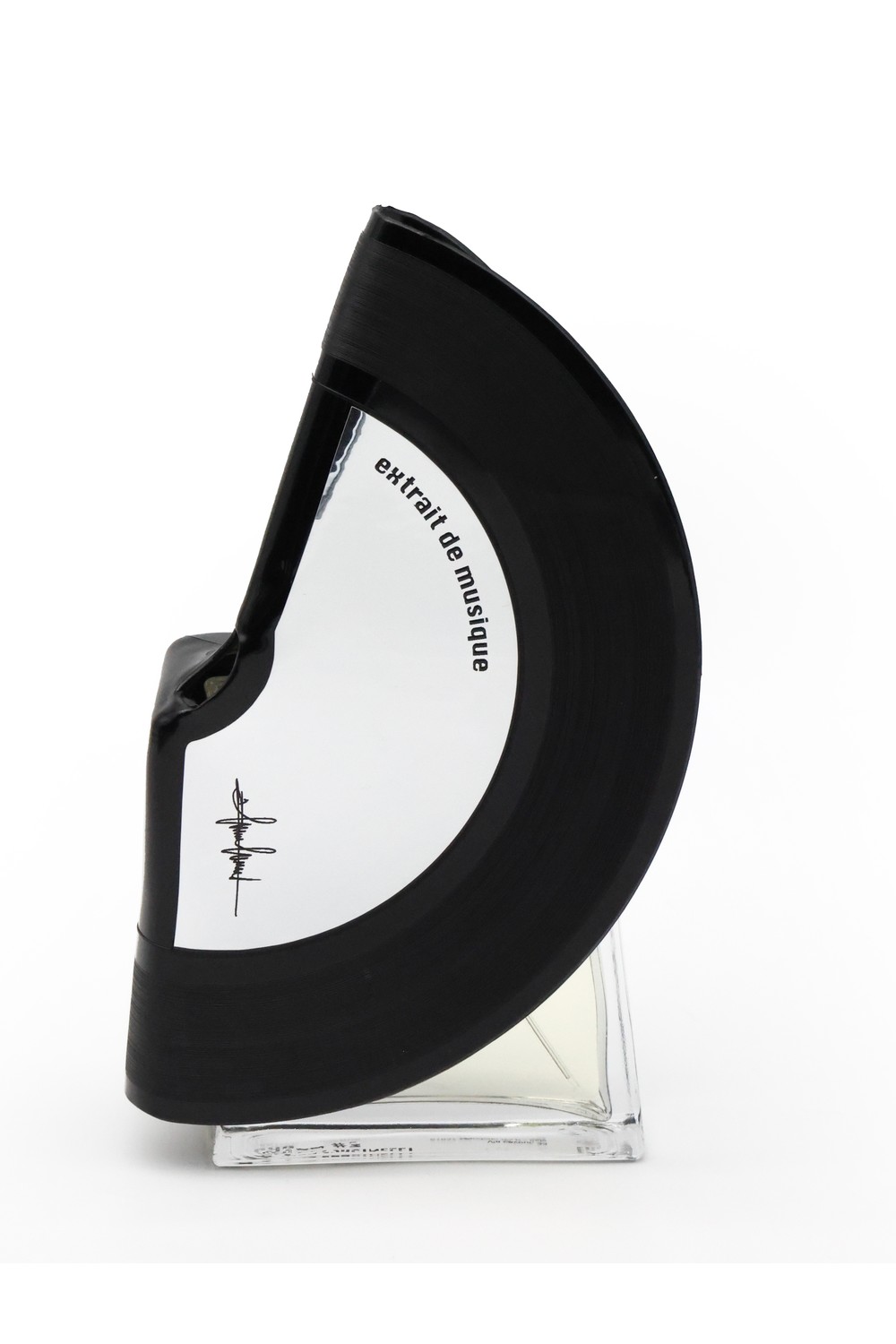
The organ then reveals itself in its dual nature, a complex machine and a voice capable of elevation. From that convergence emerges a central truth of Sorcinelli's research: spirit takes form through matter. The engine room becomes a metaphor for the incarnation of sound. Like the six other chapters, ORGAN #3 is sealed with a melted vinyl stopper, an echo of the 33 rpm records on which the child discovered the organ.
Olfactory pyramid
Filippo Sorcinelli is an organist; he does not conceive his perfumes as a pyramid of volatility but as a score. ORGAN #3 is therefore stated in three movements, subject, counter-subject and tail, as the house publishes them.
Cedarwood, leather and cypriol lay down a warm, dry, earthy matter at once, the smell of metal and oil transposed into an accord. Rose, copaiba and jasmine soften that hardness with a floral, balsamic heart, like a trace of humanity in the mechanics. Grapefruit, thyme and civet close the perfume on a bitterness and an animal warmth, the tension of the bellows under pressure.
Olfactory profile
ORGAN #3 is a leather of character, with no decorative concession. From the opening, cedar and leather impose a warm, dry matter, while cypriol adds an earthy, almost smoky root. You sense the workshop more than the nave: heated dust, metal and oil transposed into scent.
The counter-subject brings humanity. Rose and jasmine lay a discreet floral heart, while copaiba, a balsamic resin, rounds the edges of the leather and keeps it from turning aggressive. It is that meeting of hard and tender that gives the perfume its depth: the machine breathes, something living flows through it.
The tail holds the tension to the end. Grapefruit and thyme bring a clear, aromatic bitterness, while civet adds an animal warmth, the breath of the bellows under pressure. Longevity is that of an extrait, present and tenacious; the sillage, leathery and warm, leaves a trace of character, in keeping with a perfume that shows the engine behind the music.
“When the organ resounds in the church, the sound appears pure and transcendent; here, among the engines, one understands the genesis of that purity. Spirit takes form through matter.”Filippo Sorcinelli, on ORGAN #3
Key characteristics
When and where to wear
ORGAN #3 is a leather for cool seasons and the evening. Its warm, dry matter blooms in autumn and winter, in the evening more than the day. Its woody weave also lets it hold the shoulder seasons; in high summer, the leather and civet are best dosed with measure.
Usage markers
Seasonal fit
| Season | Fit | Critical notes |
|---|---|---|
| Spring | ★★★☆ | On days that stay cool. |
| Summer | ★★☆☆ | Dense; dose it lightly. |
| Autumn | ★★★★ | Its prime season, the leather reaches full measure. |
| Winter | ★★★★ | The warm matter settles in. |
Context fit
| Setting | Fit | Usage recommendation |
|---|---|---|
| Evening | ★★★★ | A leather of character, present without shouting. |
| Outing | ★★★★ | Assertive, never showy. |
| Moment of assertion | ★★★★ | Its vocation, a perfume that shows the matter. |
| Cool day | ★★★☆ | Wearable by day, more at home in the evening. |
| Shared office | ★★★☆ | Dose it; the leather is present. |
Similar perfumes
The woody, carnal leather has its neighbors; you approach it through the house's other leathers or the great niche leathers.
| Perfume | House · year | Why it is close |
|---|---|---|
| Opus 1144 | Filippo Sorcinelli · 2015 | The gothic leather of the UNUM collection, wrapped in wood and ambergris; a church leather where ORGAN #3 smells of the workshop. |
| ORGAN #2 · Easter Day | Filippo Sorcinelli · 2026 | The neighboring chapter of the extrait de musique collection; an incense chypre where ORGAN #3 descends into the machine. |
| Cuir Mauresque | Serge Lutens · 2001 | A niche leather reference, resinous and warm; to set against the more mechanical matter of ORGAN #3. |
Common questions
See also
Sources
- Filippo Sorcinelli press kit, extrait de musique collection, Esxence 2026 (ORGAN #3 text and vinyl packaging)
- Filippo Sorcinelli Fragrances 2026 press kit (history of the extrait de musique collection)
- Filippo Sorcinelli, official extrait de musique page
- Filippo Sorcinelli, official house site