Quick answers
History
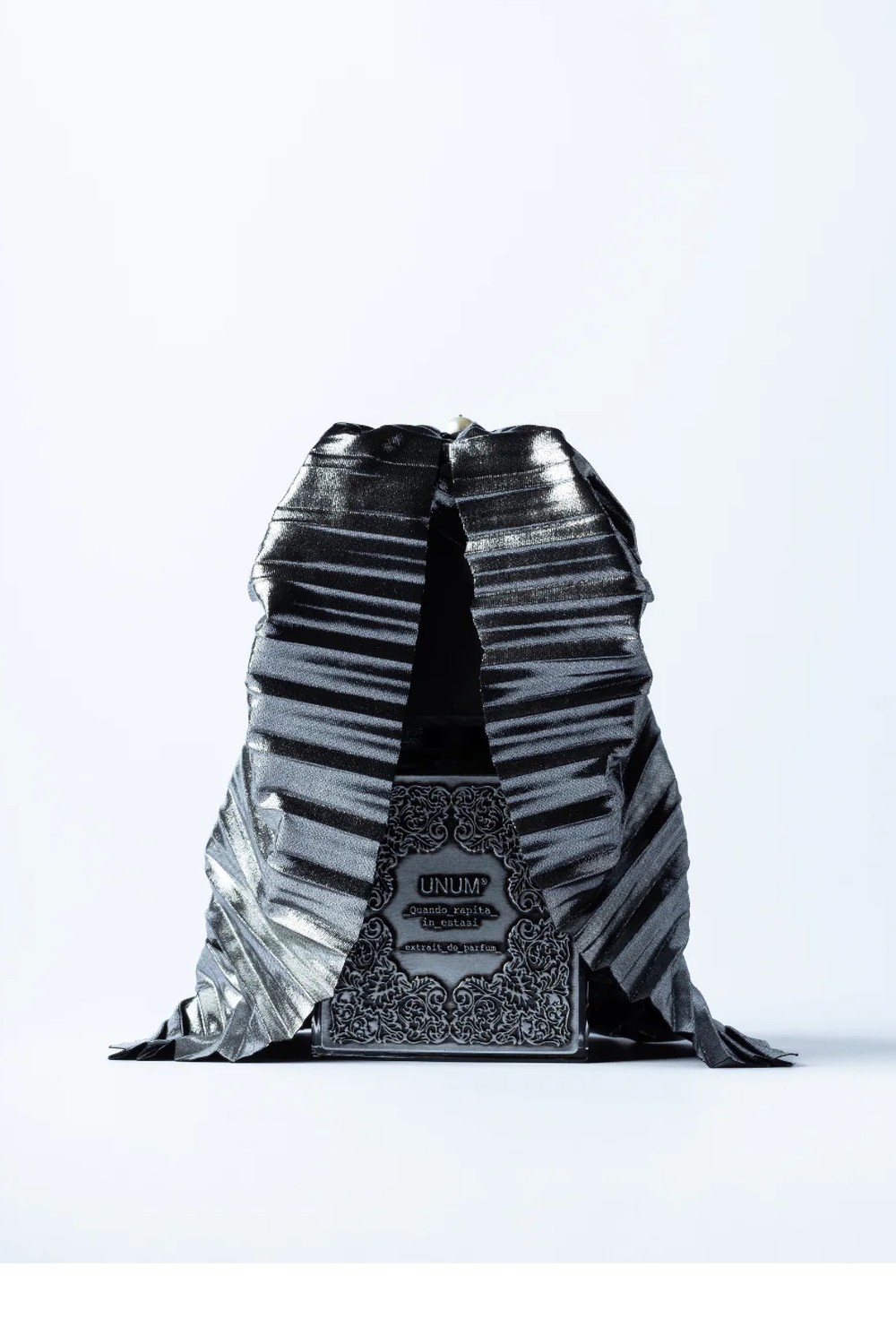
Quando rapita in estasi belongs to UNUM, Filippo Sorcinelli's first olfactory line, born in 2013 out of his atelier of sacred vestments. Where other house perfumes tell of a place or an inner state, this one tells of a voice: that of Maria Callas, the Divina.
The title is borrowed from the singing itself. The perfume captures the soprano stepping onto the stage of La Scala in Milan, in the 1950s, to perform the aria della follia, the mad scene of Lucia di Lammermoor, the opera by Gaetano Donizetti. It is the moment when the heroine, her mind unmoored, sings her own undoing: a summit of romantic bel canto, all vertigo and suspension.
To rebuild that instant, Filippo Sorcinelli speaks of a muffled place, of incense, lily of the valley and chords. The perfume does not try to illustrate a scene so much as to hold a presence, the presence of a voice that seizes its audience, quite literally, when it is rapita in estasi, carried away in ecstasy. The house makes of it an absolutely enveloping work.
Released in 2019, Quando rapita in estasi holds within UNUM the place of a floral incense: an uncommon family, where the whiteness of lily of the valley and liturgical smoke answer one another. The house, an organist before it was a perfumer, is here on home ground, between the organ, the opera and the nave.
Fragrance notes
Filippo Sorcinelli is an organist; he does not conceive his perfumes as a pyramid of volatility but as a score. Quando rapita in estasi is therefore stated in three movements, subject, counter-subject and tail. The three words name roles in the composition, not durations, so they do not necessarily match the top, heart and base. Incense returns twice, in the subject and again in the tail, like a motif that opens the singing and closes it.
The subject sets the voice: incense and lily of the valley, smoke and white flower, drawn tight by a dry cedar. The counter-subject darkens them with a spicy clove and a velvety peach with a faintly opiate note. The tail, the densest, recalls the incense and surrounds it with balsamic resins, fir, labdanum and tonka, over a base of patchouli, vetiver and vanilla: the promised envelope.
Scent profile
Quando rapita in estasi opens on a held contrast: the cold whiteness of lily of the valley and, right up against it, the gray smoke of incense. This is no bright floral but a floral of shadow, the flower lit by a candle flame rather than by daylight. Dry cedar hardens the line and keeps the muguet from turning soapy.
The counter-subject brings the flesh. Clove warms the incense with an almost medicinal spice, while peach slips in a velvety softness, an opiate accent: a slowing, a torpor, as if the voice were veiling itself. It is the perfume's most troubled passage, where ecstasy tips over into vertigo.
The tail brings incense back and drowns it in resins: balsam fir and labdanum thicken the smoke, vanilla and tonka bean barely sweeten it, patchouli and vetiver anchor it to the ground. The whole turns warm, dense, enveloping. Longevity is long, the sillage present but composed, in keeping with a perfume of nave and stage.
“Incense, lily of the valley, chords and opiates that reconstruct the Divine Callas, in an absolutely enveloping opera.”Filippo Sorcinelli, on Quando rapita in estasi
Key characteristics
When and where to wear
Quando rapita in estasi is a fragrance for cool seasons and solemn hours. Incense and balsamic resins bloom in autumn and winter, in the evening more than the day. Composed yet present, it suits concerts, places of silence and inhabited evenings; in high summer, its resinous density asks for a light hand.
How to wear it
Seasonal fit
| Season | Fit | Critical notes |
|---|---|---|
| Spring | ★★★☆ | On evenings that stay cool. |
| Summer | ★★☆☆ | Resinous; dose it lightly. |
| Autumn | ★★★★ | Its prime season, the smoke settles in. |
| Winter | ★★★★ | The balsamic incense reaches full measure. |
Context fit
| Setting | Fit | Usage recommendation |
|---|---|---|
| Concert, opera | ★★★★ | Its primary vocation, a perfume of stage and nave. |
| Inhabited evening | ★★★★ | A solemn presence, never showy. |
| Place of silence | ★★★★ | Incense unfolds here with recollection. |
| Winter indoors | ★★★☆ | Warm and enveloping, a resinous cocoon. |
| Cool day | ★★★☆ | Present without intruding, wear it dosed. |
Similar perfumes
Floral incense has few neighbors; a few perfumes share its liturgical smoke, its lily-of-the-valley whiteness or its taste for shadow.
| Perfume | House · year | Why it is close |
|---|---|---|
| LAVS | Filippo Sorcinelli · 2014 | The house's founding incense, in the same UNUM collection; barer and more resinous, without the white floral of Quando rapita in estasi. |
| Reliqvia | Filippo Sorcinelli · 2021 | Another recollection incense from the house, later; the same liturgical ground, a different light. |
| Diorissimo | Dior · 1956 | The reference for lily of the valley in perfumery; to set, all in brightness, against the smoke that darkens the same white flower here. |
Frequently asked questions
See also
Sources
- Official Filippo Sorcinelli document, Quando rapita in estasi sheet (Italian and English editions)
- Filippo Sorcinelli Fragrances 2026 press kit (UNUM collection)
- Filippo Sorcinelli, official Quando rapita in estasi page