Quick answers
History
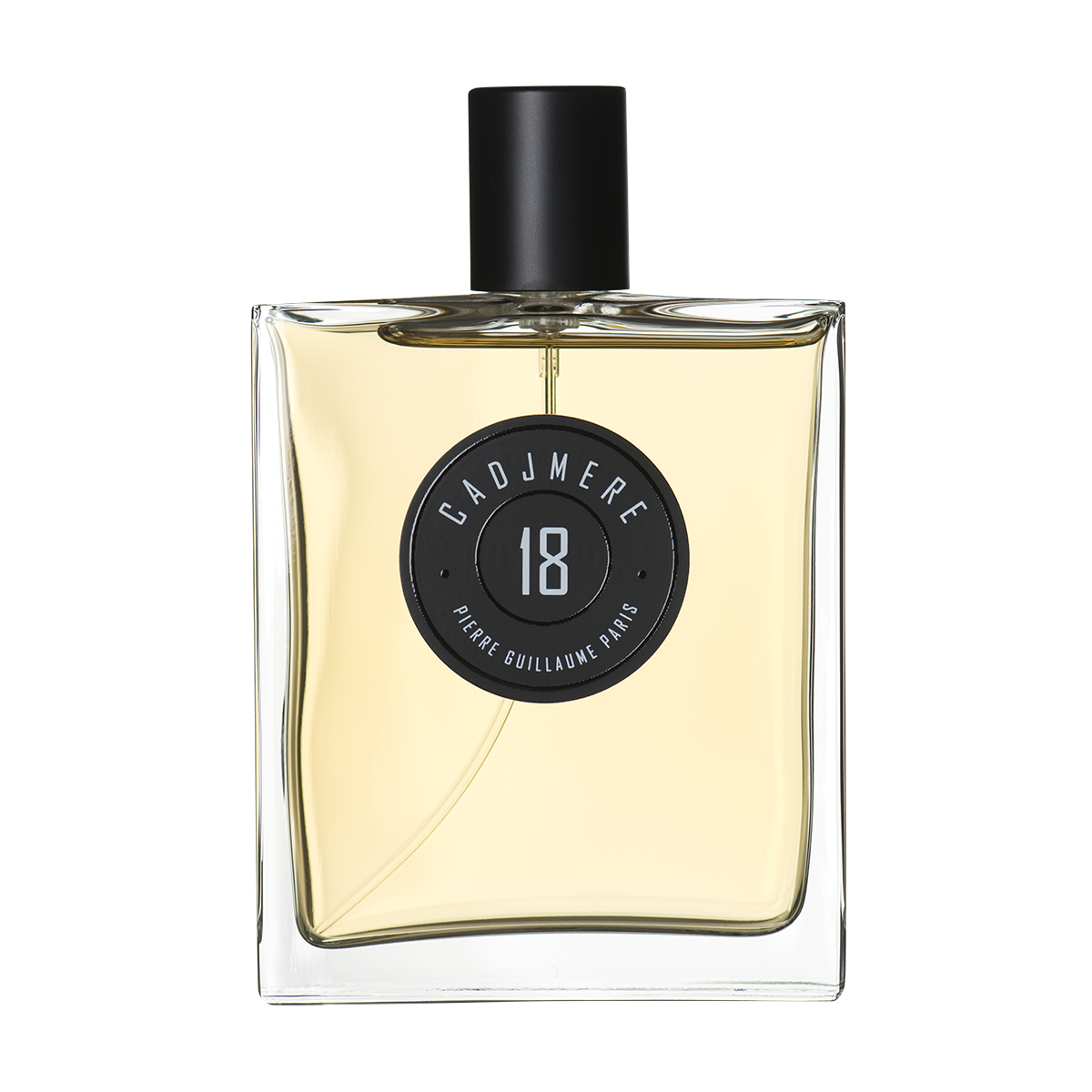
Cadjméré is, in 2007 the first sandalwood of the House of Pierre Guillaume Paris and the founding opus of theme 18. The perfumer approaches the wood not as one note among others but as a material in its own right, a “material-perfume” whose ambition is to render a texture as much as a scent.
Hence the word Pierre Guillaume claims: Cadjméré is “woven”, not simply “composed”. The milky, exotic facets of sandalwood essence have been worked to evoke the softness of a knit, the delicate caress of kashmir on the skin. Sandalwood is the pivot here, omnipresent without ever collapsing, held by a play of accords that underline its creaminess.
The bright opening of tangerine and rosewood brings the sandalwood in gently; cypress lends it a resinous freshness that keeps it from turning sweet, while vanilla and ambrette seed lay down a warm, powdery velvet in the base. The whole builds a creamy harmony, caressing and comforting, to be worn like a second skin.
The name is a portmanteau in pure PG style: “Cachemire” (kashmir) and “Mère” (mother). Sandalwood, often called “maternal wood” for its creamy, warm and reassuring nature, finds here a poetic justification. In 2009 the house extended theme 18 with Praliné de Santal 18.1, a gourmand, powdery variation that reworks in its own way the sandalwood obsession born with Cadjméré.
Fragrance notes
Cadjméré brings together tangerine and rosewood on top; sandalwood and cypress at the heart; vanilla and ambrette seed in the base.
The thread is sandalwood, omnipresent and creamy, held by cypress so it never turns sweet.
Scent profile
Cadjméré is a textured sandalwood rather than a demonstrative one. Pierre Guillaume does not seek the power of raw wood but its velvet: sandalwood is treated like cloth, creamy and enveloping, its softness evoking kashmir quite literally. It is a comfort woody, warm and reassuring, to be worn like a second skin.
Its signature lies in the balance between the milky and the dry. Vanilla and ambrette seed warm the base, cypress and rosewood keep it bright, so the fragrance stays creamy without ever turning heavy. The trail is soft and close to the body, which makes it a unisex sandalwood, easy to wear in any season.
A perfume that can be called “woven” rather than simply “composed”.Pierre Guillaume Paris, catalogue 2025-26
Key characteristics
When and where to wear
Cadjméré is a comfort sandalwood, at its best when the cold calls for creamy woods, but its hesperidic clarity makes it wearable all year. Its enveloping softness makes it an everyday companion as much as a skin scent for the evening.
How to wear it
Seasonal fit
| Season | Fit | Critical notes |
|---|---|---|
| Spring | ★★★☆ | Tangerine and rosewood awaken. |
| Summer | ★★☆☆ | The creamy sandalwood can weigh in the heat. |
| Autumn | ★★★★ | Ideal season for its velvet. |
| Winter | ★★★★ | The kashmir sandalwood envelops. |
Context fit
| Setting | Fit | Recommended use |
|---|---|---|
| Everyday | ★★★★ | Reference use. |
| Cocooning | ★★★★ | Its comfort ground. |
| Office | ★★★★ | Soft and close to the body. |
| Evening | ★★★★ | Sensual and enveloping. |
| Sport | ★★☆☆ | Too creamy for exertion. |
Similar perfumes
Pierre Guillaume’s sandalwood speaks to its own variation and then to the great creamy sandalwoods of niche perfumery.
| Perfume | House · year | Why it is close |
|---|---|---|
| Praliné de Santal 18.1 | Pierre Guillaume Paris · 2009 | The gourmand variation of theme 18: a powdery sandalwood-hazelnut, energised by heliotrope and fleur de sel. Where Cadjméré weaves kashmir, Praliné de Santal turns it into a woody praline. |
| Santal Blush | Tom Ford · 2011 | A creamy, carnal sandalwood from mainstream niche, spicy and milky, the same search for an enveloping, textured wood. |
Frequently asked questions
See also
Sources
- Pierre Guillaume Paris catalogue 2025–26 (English edition)
- Pierre Guillaume Paris, official Cadjméré page