Quick answers
History
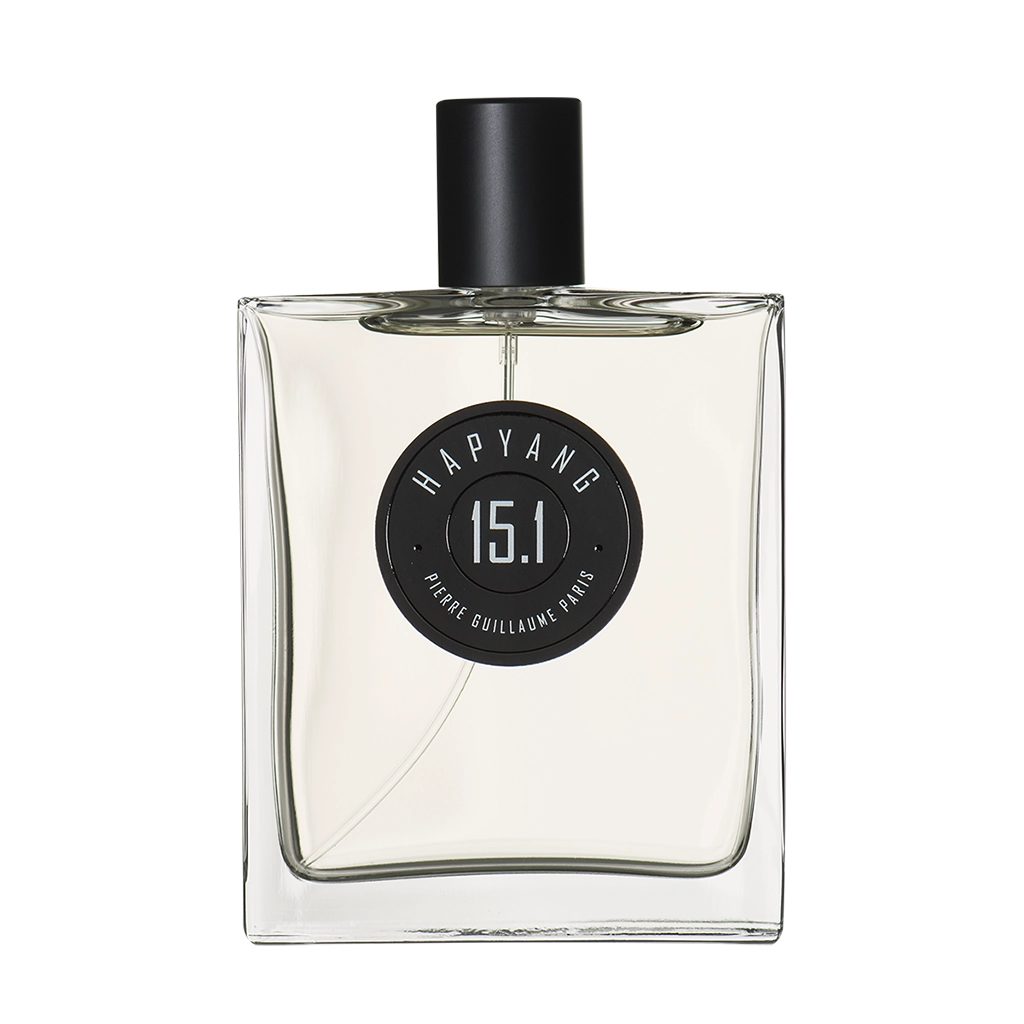
Hapyang takes on a monument. The aldehydic floral sub-family is a prestigious lineage opened more than a century ago: these synthetic materials bring volume and brilliance, and evoke at times the heat of molten metal, at others the feeling of clean, freshly ironed linen. Synonymous with glamour and femininity for generations of women, aldehydes form an almost sanctified territory. For Pierre Guillaume, the question was how to bring it into his own aesthetic world without betraying its spirit.
The idea came by chance, on discovering a series of photographs by Jeffrey Vanhoutte showing a dancer in a cloud of powder. From there came the governing image of the scent: the aldehydes should twirl in a vast cloud of powder. The name condenses that intent, a contraction of Happy and Ylang, where joy meets the exotic flower. Hapyang stands as the second variation on theme 15, the floriental, and draws on nearly 120 ingredients, including a palette of aldehydes, hexyl cinnamic, anisic, C11, C12, cyclamen and C18.
The composition makes a white floral heart sparkle in a slightly amber cloud of powder. Magnolia and ylang-ylang form its sweet, exotic radiance, enlivened by the aldehydes; pearwood, benzoin and vanilla then rise in an oriental breath, enveloping the skin like a veil of shimmering silk. Launched in 2020 and classed as an amber aldehydic floral, Hapyang rereads a classic genre with a long trail and a contemporary roundness.
Fragrance notes
Hapyang unfolds from aldehydic sparkle to oriental breath, by way of a white-flower heart.
The aldehydic cloud of powder stays the thread, from the first sparkle to the final oriental veil.
Scent profile
Hapyang is a contemporary aldehydic floral, rounder and more powdery than metallic. The aldehydes give the sparkle expected of the genre, but the perfumer at once wraps them in a cloud of powder that softens their edge. Magnolia and ylang-ylang bring a sweet, exotic white-floral heart, luminous without being heady.
It is the base that signs the rereading. Pearwood, benzoin and vanilla pull the bouquet toward a tender oriental and give the scent its hold and long trail. Hapyang remains a fragrance of celebration and glamour, in the line of the great aldehydics, yet dressed in an amber softness that makes it more wearable day to day. A powdery floral that owns its heritage while modernising it.
Hapyang is an explosion of powder and floral sparkle, with a never-ending wake.Pierre Guillaume, perfumer
Key characteristics
When and where to wear
Hapyang is a mid-season, evening powdery floral. Its aldehydic cloud shines in cool weather and dresses up occasions; the amber base also lets it hold day to day, in moderation.
How to wear it
Seasonal fit
| Season | Fit | Critical notes |
|---|---|---|
| Spring | ★★★★ | The powdery sparkle blooms. |
| Summer | ★★★☆ | Fresh at night, heady in full sun. |
| Autumn | ★★★★ | Its season of choice. |
| Winter | ★★★☆ | The amber base warms it. |
Context fit
| Setting | Fit | Recommended use |
|---|---|---|
| Going out | ★★★★ | Owned glamour. |
| Evening | ★★★★ | The long trail shines. |
| Everyday | ★★★☆ | Smart but wearable. |
| Office | ★★★☆ | In moderation. |
| Sport | ★★☆☆ | Too dressed up. |
Similar perfumes
Hapyang converses with the great aldehydic florals; two references place its heritage.
| Perfume | House · year | Why it is close |
|---|---|---|
| N°5 | Chanel · 1921 | The founding aldehydic floral, the genre’s monument, to which Hapyang pays tribute by rereading it. |
| Iris Poudre | Éditions de Parfums Frédéric Malle · 2000 | A modern powdery aldehydic by Pierre Bourdon, the same sparkling cloud over a soft base. |
Frequently asked questions
See also
Sources
- Official Hapyang press kit · Pierre Guillaume Paris
- Pierre Guillaume Paris 2026 catalogue
- Pierre Guillaume Paris, official site