Quick answers
History
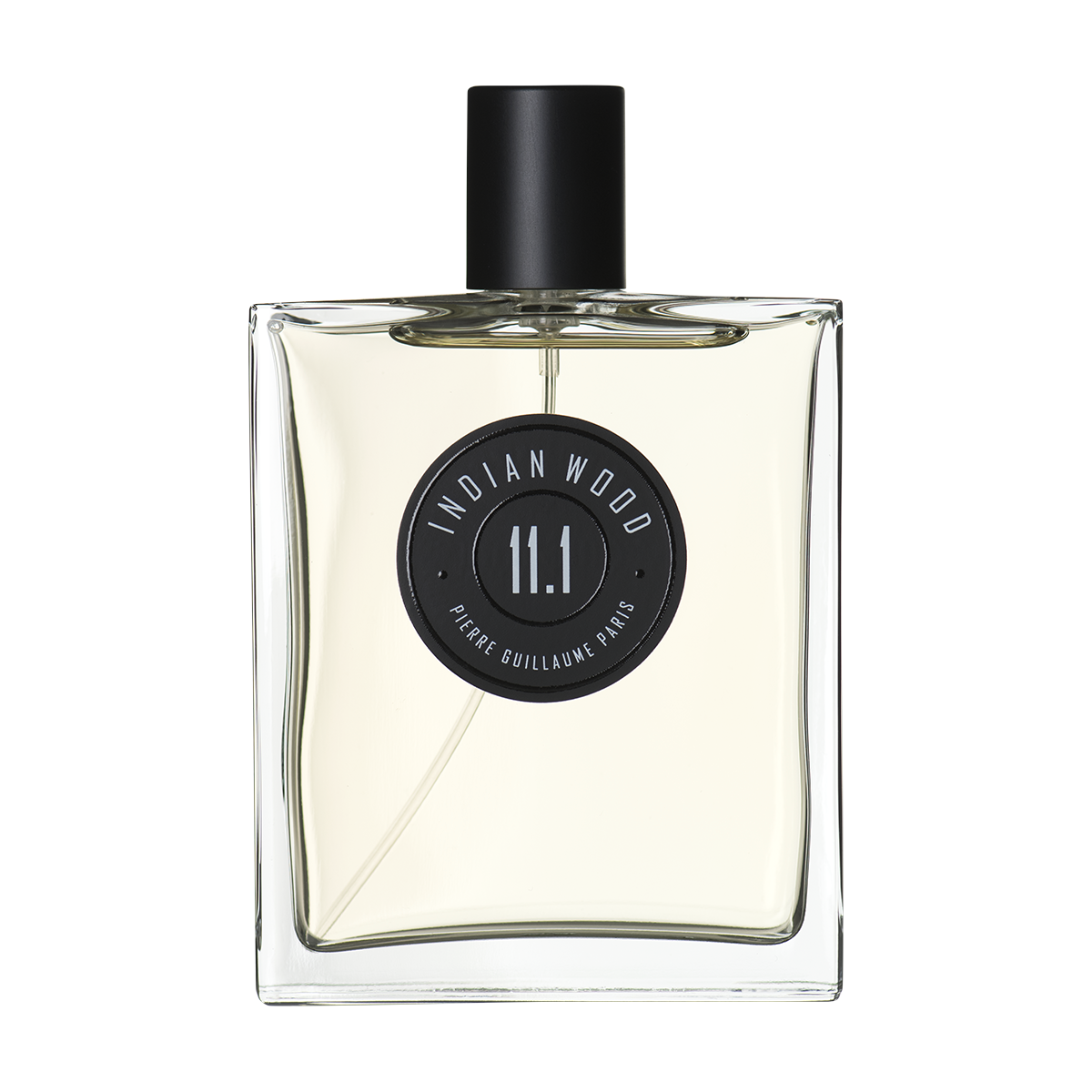
Indian Wood extended Pierre Guillaume’s theme 11, the spicy aromatic, in 2016, carrying it to the land of the maharajahs. Where other spicy scents seek full warmth, Indian Wood plays contrast: the menthol cold of peppermint against the round warmth of nutmeg and cardamom, like the moisture of a rainy season.
It is this hot-and-cold play that makes the composition. The spices do not only warm, they refresh, and peppermint keeps the whole in tension. A hint of coconut milk pierces this contrast with a carnal, milky vibration that rounds the edges without dimming the liveliness of the spices.
The opening belongs to peppermint and nutmeg; the heart settles cardamom and coconut milk, between cold spice and tropical creaminess; the base gathers sandalwood, vetiver and tree moss for a captivating woody trail, dark and green. The composition thus moves from spicy freshness toward a deep wood.
The name sums up the journey: Indian Wood guides us into the heart of an Indian forest. Within theme 11 the variation speaks to Spicematic 11.2, a more mineral, incense-laden “marble water”: two readings of the same spicy-aromatic family, one woody and humid, the other dry and cold.
Fragrance notes
Indian Wood brings together peppermint and nutmeg on top; cardamom, coconut milk and lemon at the heart; sandalwood, vetiver and tree moss in the base.
The thread is the hot-and-cold contrast, peppermint keeping the spices in tension all the way to the wood.
Scent profile
Indian Wood is a spicy woody rather than a gourmand spicy. Pierre Guillaume does not seek full warmth but contrast: peppermint cools the spices, nutmeg and cardamom warm them, and coconut milk rounds the whole with a carnal creaminess. It is a spicy scent of character, dark and mysterious, steered toward a deep wood.
Its signature lies in this split between menthol cold and tropical moisture. Sandalwood, vetiver and tree moss lay a captivating woody base that anchors the composition. The trail is present, more assertive than the average PG spicy, which makes it a mid-season and cool-weather scent, unisex and enveloping.
Peppermint, nutmeg and cardamom fit in a hot-and-cold contrast.Pierre Guillaume Paris, catalogue 2025-26
Key characteristics
When and where to wear
Indian Wood is a mid-season spicy woody, at its best when coolness calls for contrasted spices. The sandalwood and vetiver base gives it enough hold for autumn and winter, while peppermint keeps it wearable as soon as the heat returns.
How to wear it
Seasonal fit
| Season | Fit | Critical notes |
|---|---|---|
| Spring | ★★★★ | Peppermint blooms. |
| Summer | ★★★☆ | The contrast holds the heat. |
| Autumn | ★★★★ | Ideal season for its wood. |
| Winter | ★★★★ | Spices and sandalwood warm it. |
Context fit
| Setting | Fit | Recommended use |
|---|---|---|
| Everyday | ★★★★ | Reference use. |
| Office | ★★★☆ | If the trail stays measured. |
| Evening | ★★★★ | Dark and captivating. |
| Dates | ★★★★ | A spicy scent of character. |
| Sport | ★★☆☆ | Too woody for exertion. |
Similar perfumes
Pierre Guillaume’s spicy woody speaks first to its own theme, then to the great fresh spices of niche perfumery.
| Perfume | House · year | Why it is close |
|---|---|---|
| Spicematic 11.2 | Pierre Guillaume Paris · 2020 | The other variation of theme 11: a spicy-aromatic, incense-laden “marble water” of spearmint, saffron, ginger and frankincense. Where Indian Wood plays woody moisture, Spicematic plays the mineral hardness of rock. |
| Poivre Piquant | L’Artisan Parfumeur · 2002 | A milky spicy scent from niche, pepper and honey over milk, the same search for a contrast between biting spice and creamy softness. |
Frequently asked questions
See also
Sources
- Pierre Guillaume Paris catalogue 2025–26 (English edition)
- Pierre Guillaume Paris, official Indian Wood page