Quick answers
History
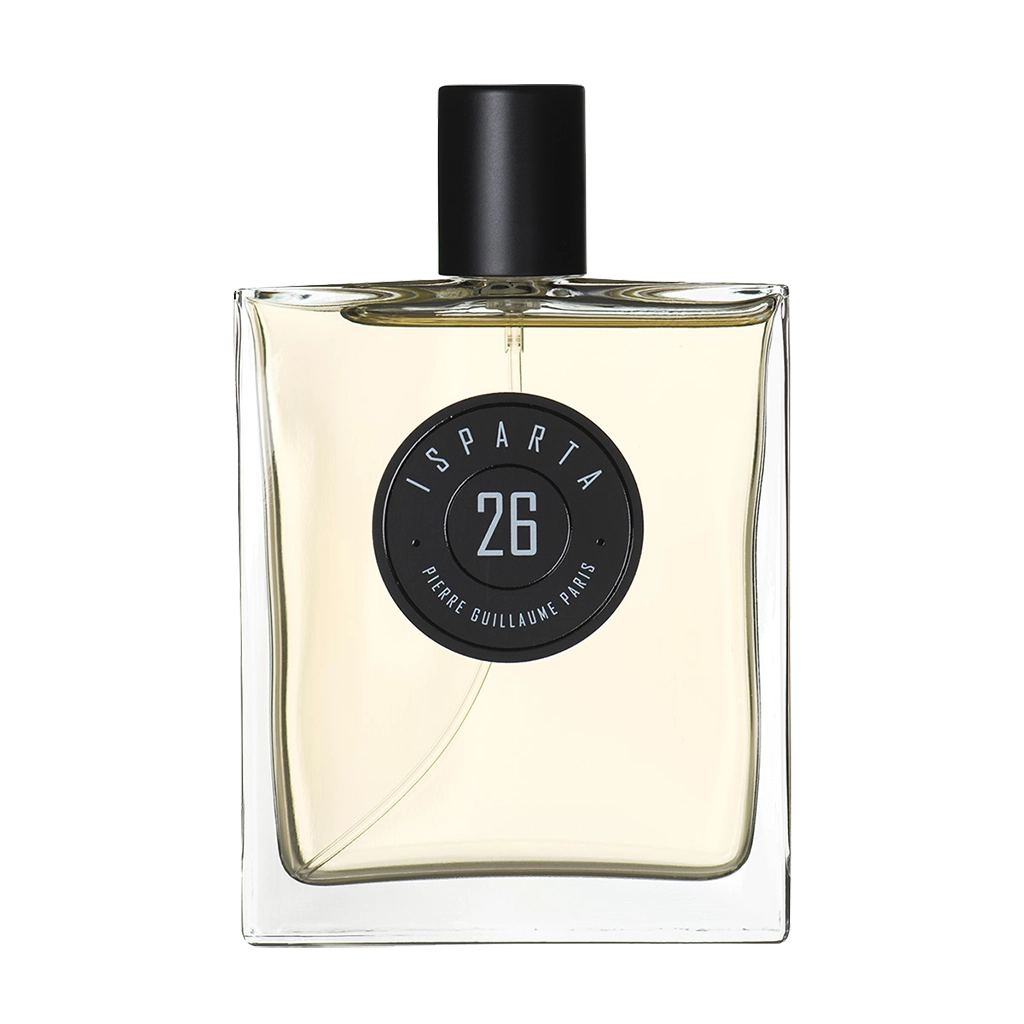
Isparta opened Pierre Guillaume’s theme 26 in 2014, a neo-chypre built entirely around the rose of Turkey. The province of Isparta is famed for its rose oil, obtained from a variety called the “Isparta Summer Roses”, which grow profusely in gardens and terraced fields on the soft mountain slopes.
The roses are picked early in the morning, when they are half-open and their fragrance is strongest: intense, rich, slightly spicy. It is this rose that Pierre Guillaume places at the center of a neo-chypre, a modernized chypre structure that abandons the classic oakmoss in favor of a woody, ambered base.
Behind wisps of burning resins, Isparta hides a woody rose, embraced by the velvety animal accord of red fruit, benzoin, calamus and ambroxan. Red fruits and the Isparta rose open the composition with a fleshy glow; patchouli and calamus settle a woody, spicy heart; ambroxan and resins lay down an animal warmth in the base, dark and enveloping.
The name states the origin: the summer roses of the horticultural province of Isparta, in Turkey, the rose capital of the world. Isparta is number 26 of the numbered collection and opens the neo-chypre theme, with no decimal variation to date: the house’s rose treated as a neo-chypre, between fruity glow and resinous depth.
Fragrance notes
Isparta brings together red fruits and Isparta rose on top; patchouli and calamus at the heart; ambroxan, benzoin and resins in the base.
The thread is the Isparta rose, woody and fruity, embraced by resins and ambroxan in an animal velvet.
Scent profile
Isparta is a neo-chypre rather than a classic chypre. Pierre Guillaume places the rose of Turkey on top, but wraps it not in oakmoss but in a woody, ambered base: patchouli, ambroxan and resins draw a dark, sensual rose, far from bright, powdery roses. It is a woody rose, warm and animal.
Its signature lies in this resinous setting that embraces the flower: red fruits give it glow, calamus spices it, ambroxan and benzoin give it depth. The rose is never demure, always held by an animal warmth. The trail is present and enveloping, which makes it a chypre of character, unisex, at ease in the evening and in cool weather.
A woody rose embraced by a velvety animalic accord of red fruit, benzoin, calamus and ambroxan.Pierre Guillaume Paris, catalogue 2025-26
Key characteristics
When and where to wear
Isparta is a cool-weather neo-chypre, at its best when coolness sets off its resinous rose. Its red fruits and rose nonetheless keep enough glow for mid-season, while ambroxan and resins bloom in cold weather and in the evening.
How to wear it
Seasonal fit
| Season | Fit | Critical notes |
|---|---|---|
| Spring | ★★★★ | The fruity rose blooms. |
| Summer | ★★★☆ | The fruity glow holds the heat. |
| Autumn | ★★★★ | Ideal season for its resins. |
| Winter | ★★★★ | Ambroxan and patchouli warm it. |
Context fit
| Setting | Fit | Recommended use |
|---|---|---|
| Everyday | ★★★★ | Reference use. |
| Dates | ★★★★ | A sensual, animal rose. |
| Evening | ★★★★ | Its resinous ground. |
| Office | ★★★☆ | If the trail stays measured. |
| Sport | ★★☆☆ | Too resinous for exertion. |
Similar perfumes
Pierre Guillaume’s neo-chypre speaks to the great woody, chypre roses of niche perfumery.
| Perfume | House · year | Why it is close |
|---|---|---|
| Isparta as the house’s rose | Pierre Guillaume Paris · 2014 | Within the PGP catalogue, Isparta is the rose opus of the neo-chypre, distinct from the neighboring floral or woody themes; its rose of Turkey and resinous base make it a signature of its own. |
| Rose 31 | Le Labo · 2006 | A woody neo-chypre from niche built around rose and cumin, the same drive to anchor the flower in a woody, animal base rather than a powdery one. |
Frequently asked questions
See also
Sources
- Pierre Guillaume Paris catalogue 2025–26 (English edition)
- Pierre Guillaume Paris, official Isparta page