Quick answers
History
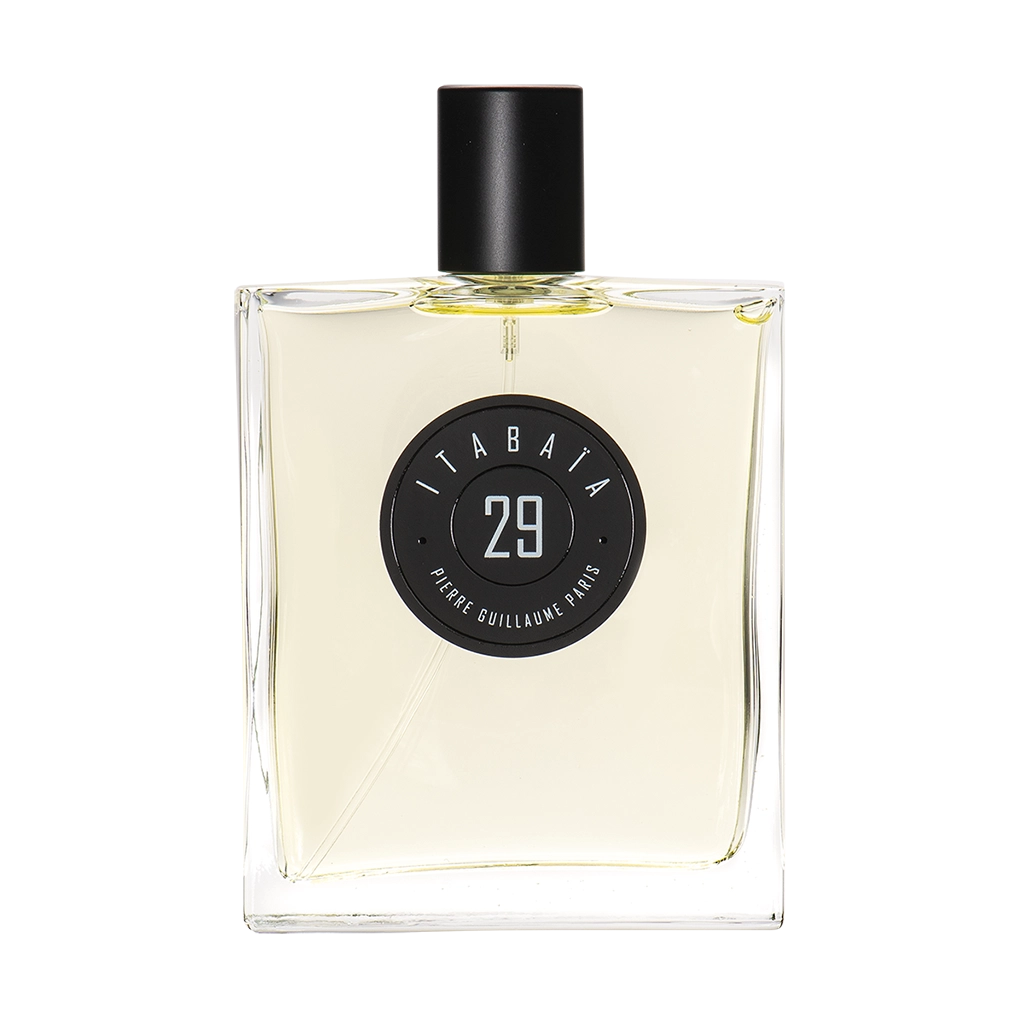
Itabaïa wears a name invented by the perfumer, of undetermined gender: an elegant, mysterious word whose exotic sounds evoke Brazil, dance and a divinity. It opens a new theme in the house’s numbered collection, theme 29, which Pierre Guillaume names Hesperimental, a contraction of hesperides and experimentation. The intent is plain: to lift citrus out of its role as a mere top-note freshness and make it the material of an entire composition.
The inspiration comes from capoeira, the Afro-Brazilian art that blends dance and wrestling. On the beach of Itacaré, dance warriors perform an acrobatic, solar ballet to the rhythm of the berimbau and feverish songs, lifting the sand in the light of the setting sun. From that energy the perfumer draws the image of a hesperidic heat wave, coloured with vanilla and hemp, where the freshness of citrus gradually takes on warmer materials.
The casting is precise. Citrus galore, bergamot, lemon and grapefruit, is complicated by an original note of pineapple leaves. The jurema flower, or Central American mimosa tenuiflora, brings a green, honeyed, powdery heart with herbaceous and resinous facets close to hemp, which a hint of maracuja tinges with fruit. Hibiscus wood, hemp and vanilla close the accord on warm, amber facets. It is this hemp-and-vanilla accord that gives Itabaïa its neo-chypre air, where the fresh notes barely conceal the wisps of a spliff.
Fragrance notes
Itabaïa reads as a rise in temperature, from bright citrus to the resinous base of hemp and vanilla.
The thread is heat: a hesperidic that does not evaporate but gathers resin and vanilla.
Scent profile
Itabaïa is not a cologne. It is a citrus of substance, its hesperides held by an unusual base. Bergamot, lemon and grapefruit open in full light, but the pineapple-leaf note at once adds a green, exotic dimension that signals what follows. The green, honeyed jurema-flower heart bridges toward the resinous facets.
It is the hemp-and-vanilla accord that signs the scent and gives it its neo-chypre air. Hemp brings a herbaceous, balsamic, almost smoky note that vanilla and hibiscus wood round with amber warmth. Itabaïa keeps the solar freshness of its opening while anchoring itself in deeper material: a citrus of character, for when you want sunshine without the banality of a cologne.
Itabaïa renews the hesperidic genre in our collection: a hesperidic heat that takes on a neo-chypre air thanks to an accord of hemp and vanilla.Pierre Guillaume Paris
Key characteristics
When and where to wear
Itabaïa is a warm-season citrus, more tenacious than most. Its solar freshness suits spring and summer, while its hemp-vanilla base lets it hold through mid-season and a long day.
How to wear it
Seasonal fit
| Season | Fit | Critical notes |
|---|---|---|
| Spring | ★★★★ | The freshness blooms. |
| Summer | ★★★★ | Its season of choice. |
| Autumn | ★★★☆ | The warm base takes over. |
| Winter | ★★☆☆ | A touch solar in the cold. |
Context fit
| Setting | Fit | Recommended use |
|---|---|---|
| Everyday | ★★★★ | Its reference use. |
| Holidays | ★★★★ | Sunshine in a bottle. |
| Outdoors | ★★★★ | Its natural ground. |
| Office | ★★★☆ | Fresh and tenacious. |
| Evening | ★★★☆ | In warm weather. |
Similar perfumes
Itabaïa rereads the hesperidic; two neighbours place its originality.
| Perfume | House · year | Why it is close |
|---|---|---|
| À l’Heure des Catleyas | Pierre Guillaume Paris · 2026 | The 29.1 variation that extends the Hesperimental theme, more floral and solar. |
| Eau Sauvage | Christian Dior · 1966 | The benchmark hesperidic by Edmond Roudnitska, from which Itabaïa departs through its resinous, warm base. |
Frequently asked questions
See also
Sources
- Official Itabaïa press kit · Pierre Guillaume Paris
- Pierre Guillaume Paris 2026 catalogue
- Pierre Guillaume Paris, Itabaïa press page