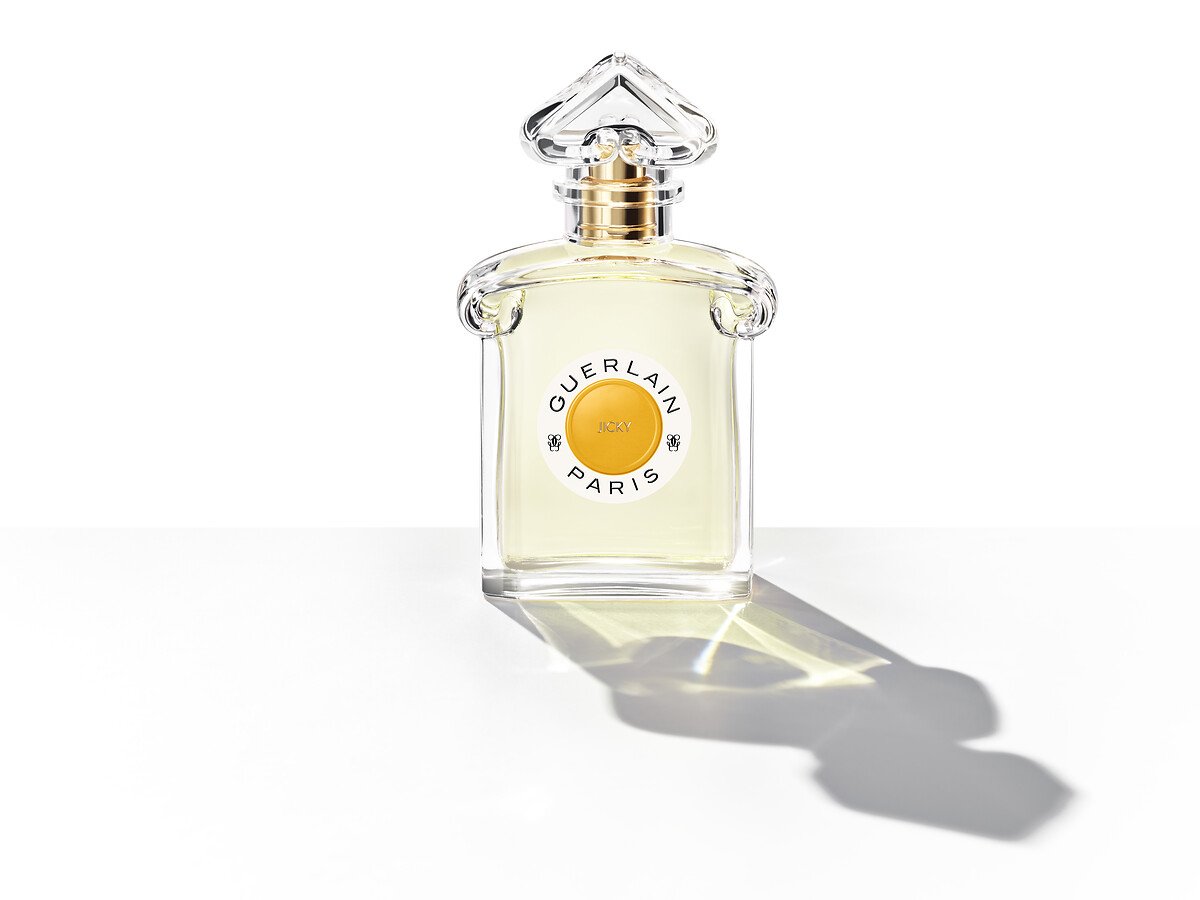
Story
Jicky was composed in 1889 by Aime Guerlain, second-generation perfumer of the Guerlain family, for the eponymous Parisian house founded by his father Pierre-Francois-Pascal Guerlain in 1828. The nickname Jicky is reported in Guerlain archives as a personal reference of the perfumer, most often associated with a young woman of his acquaintance, though the house has never confirmed a single canonical origin.
Jicky is widely cited as the first modern perfume in industry literature. The historical significance does not lie in the launch year alone, but in the structural choice. Aime Guerlain anchored the base on three synthetic raw materials newly available to perfumers at the end of the nineteenth century: vanillin (isolated in 1874), coumarin (synthesised in 1868) and synthetic linalool. Before Jicky, commercial perfumery relied almost exclusively on natural distillation and extraction. By integrating laboratory molecules into the formula, Guerlain shifted perfumery from a craft of botanical reproduction toward a composed art capable of effects beyond what nature alone could provide.
The commercial reception in 1889 was uneven. Reviews and Guerlain archives indicate that the abstract, animalic-ambery character of Jicky disconcerted many female buyers used to soliflore compositions. The perfume found its early audience among men, who wore it openly through the 1890s and 1900s, and remained predominantly a masculine choice until the 1920s, when emancipated female buyers reclaimed Jicky as a unisex statement perfume.
More than a century later, Jicky is still in production at Guerlain. The composition has been reformulated several times to comply with IFRA restrictions, in particular on civet, but the structural identity remains. Luca Turin and Tania Sanchez awarded Jicky five stars in Perfumes: The Guide, the English-language reference of fragrance criticism, describing it as a foundational work that still reads as modern. Jicky is also the founding composition of the so-called Guerlinade, the in-house signature accord built on bergamot, vanilla, tonka, rose, jasmine and iris that recurs through the Guerlain catalogue. The olfactory pyramid and profile below describe the version sold today, reformulated over time while preserving the original signature; the 1889 creation is recounted in the Story section above.
Olfactory pyramid
The pyramid below reflects the version currently on the market, reformulated over more than a century for IFRA compliance; the 1889 original is described in the Story section above. The architecture of Jicky is aromatic, fresh on top and powdery-ambery on the drydown. Aime Guerlain composed an abstract structure in which natural extracts coexist with synthetic anchors, a configuration unprecedented in commercial perfumery in 1889. Notes documented in Guerlain official communications.
Top
Lavenderaromatic signature at the core of Jicky
Bergamot, rosemarycitrus and herbal opening
Heart
Orris, jasminepowdery florals
Rosefresh floral facet
Base
Tonka bean, vanillacoumarin and vanillin, the founding synthetics of 1889
Civet, opoponax, amberanimalic balsamic drydown
Evolution on skin tells the story Aime Guerlain composed. The lavender-bergamot opening reads almost like an eau de cologne for the first thirty minutes. The heart then turns powdery and ambery as the synthetic linalool meets the orris and jasmine. The base develops slowly into a warm vanilla-tonka skin scent, with the civet animalic facet softened in modern reformulations but still audible on the drydown.
Olfactory profile
The olfactory profile of Jicky articulates an aromatic-hesperidic opening, a powdery floral heart and a warm ambery drydown into a deliberately abstract signature. The opening is fresh and lavender-forward, anchored by bergamot and rosemary. The heart pivots on synthetic linalool, which acts as a bridge between the natural lavender of the top and the powdery orris-jasmine combination. The base settles on tonka bean and vanilla, with opoponax and amber rounding the warmth, and the animalic facet of civet adding the slightly indecent character that defined the 1889 reception.
The distinctive signature rests on the abstraction itself. Where contemporary perfumes of 1889 still tried to reproduce a single flower or a single material, Aime Guerlain composed an accord that smelled like no single ingredient. That deliberate abstraction is the conceptual leap that historians of perfumery identify as the birth of modern perfumery.
Jicky is the moment perfumery stopped trying to copy nature and started composing with it. More than a century on, it still reads as modern.
Key characteristics
Family
Aromatic lavender ambery, proto-fougere of modern perfumery
Typical longevity
8 to 12 hours on skin, depending on concentration
Sillage
Moderate, refined, never aggressive in current formulations
Audience
Men and women, unisex by historical positioning since 1889
Frequently asked questions
Who composed Jicky?01
Aime Guerlain, second-generation perfumer of the Guerlain family, composed Jicky in 1889 for the family house founded by his father Pierre-Francois-Pascal Guerlain in 1828 in Paris (France).
Why is Jicky called the first modern perfume?02
Because it was the first commercial perfume to anchor its base on synthetic raw materials, including vanillin, coumarin and synthetic linalool. Before Jicky, perfumery relied almost exclusively on natural extracts.
What is the olfactory family of Jicky?03
Aromatic lavender ambery, often cited as the proto-fougere of modern perfumery. The lavender-coumarin-vanillin trio that Jicky introduced became the structural backbone of the fougere family.
How long does Jicky last on skin?04
Between 8 and 12 hours on skin, depending on concentration (eau de toilette or eau de parfum) and skin type.
Is Jicky for men or women?05
Jicky was launched unisex in 1889 and is marketed today by Guerlain for both men and women. Historically, it was mostly worn by men until the 1920s.
Is Jicky still being made?06
Yes. Jicky has been in continuous production since 1889, with several reformulations to meet IFRA restrictions, in particular on civet.
What rating did Jicky receive in Perfumes: The Guide?07
Five stars from Luca Turin and Tania Sanchez, who described Jicky as a foundational work that still reads as modern more than a century after its release.
What is the Guerlinade and how does Jicky relate to it?08
The Guerlinade is the in-house signature accord of Guerlain, built on bergamot, vanilla, tonka, rose, jasmine and iris. Jicky is the founding composition of that accord, which Jacques Guerlain later codified into a recognisable house signature.