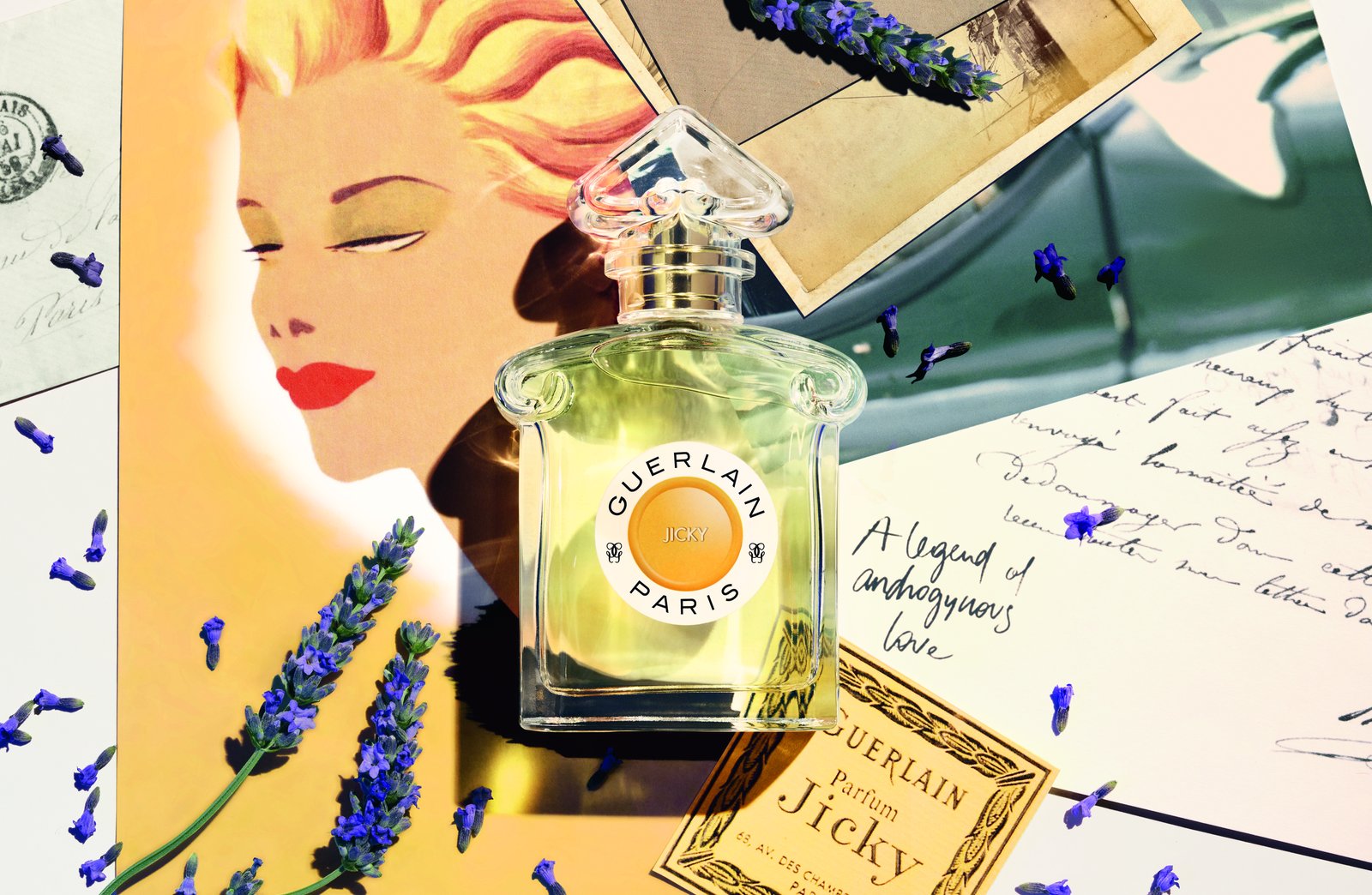
What perfumery looked like before Jicky
For most of the 19th century, European perfumery ran almost entirely on naturals: essential oils, absolutes, concretes, tinctures, and a narrow range of animal materials such as civet, musk pod, castoreum and ambergris. The palette was wide on natural facets but limited on stability and reproducibility. The same jasmine absolute could shift in quality between seasons, and bergamot oil could oxidize within months if mis-stored. American buyers of imported French perfumes in the 1880s often dealt with batch-to-batch variation that would be unacceptable in today's US retail environment.
The dominant style at mid-century was the soliflore, built around the impression of one flower such as rose, violet, lily of the valley or mimosa. Secondary materials only supported the central motif. Houses such as Guerlain, founded in Paris in 1828, Houbigant founded in 1775, Lubin founded in 1798, Roger and Gallet founded in 1862, and Ed. Pinaud founded in 1810 competed on sourcing quality and on the variations they could pull from the same raw materials. American department stores stocked these houses from the 1860s onward, mostly under cologne and toilet water labels.
Two technical developments out of the 1860s and 1870s changed the trajectory. The first was the industrial isolation of synthetic aroma molecules, with coumarin synthesized by William Henry Perkin in England in 1868 and vanillin synthesized by Wilhelm Haarmann and Ferdinand Tiemann in Germany in 1874. The second was the rise of fractional distillation and chemical synthesis at industrial scale. By the late 1870s, French and German perfumers had a new toolkit available, but no one had yet figured out how to build a commercial perfume around it.
1882 and Fougere Royale, the first crack
The first commercial perfume to use a synthetic as an architectural pillar rather than as a decorative trim was Fougere Royale, signed in 1882 by Paul Parquet for Houbigant. The piece was built around synthetic coumarin, the molecule isolated from tonka bean character that Perkin had synthesized fourteen years earlier. Parquet treated coumarin as the anchor of a new accord, pairing it with lavender, oakmoss, geranium and bergamot. The result smelled like nothing the American or European market had carried before.
Reception was strong inside the trade but narrow with the public. Other perfumers admired the work and started copying the approach, but Fougere Royale itself stayed positioned as a niche men's release rather than a wide commercial hit. Paul Parquet seems to have understood that he had opened a door without walking all the way through it. Today the perfume is treated by US niche schools as the founding member of the fougere family, the masculine category that would later produce Azzaro Pour Homme in 1978, Drakkar Noir in 1982, and the entire American clean-fresh men's tradition of the 1980s and 1990s.
The structural takeaway from Fougere Royale was that a synthetic could carry a perfume's identity instead of just accenting it. The next generation of French perfumers studied this carefully, including Aimé Guerlain, who would push the approach significantly further by stacking multiple synthetic anchors inside a single composition seven years later.
1889 and Jicky, the founding text
The release year, 1889, is also the year of the Paris Exposition Universelle and the inauguration of the Eiffel Tower, which is the kind of trivia US niche journalists tend to cite when they introduce the perfume. Aimé Guerlain had taken over creative direction of the family house in 1864 after the death of his father Pierre-Francois-Pascal Guerlain. He came from a chemistry background and had spent two decades quietly testing what synthetics could do. Jicky was the public expression of that long bench work: a deliberate demonstration that a perfume could be built around synthetic anchors rather than around naturals.
Three synthetics carry the structure. Vanillin supplies a creamy amber sweetness more stable and longer-lasting than natural vanilla extract. Coumarin, already proven by Fougere Royale, delivers the warm narcotic facet that bridges the floral heart with the oriental base. Synthetic linalool stabilizes the lavender heart with a precision that natural lavender oil cannot reach alone. Around these three pillars, Aimé Guerlain assembled the natural materials that would later become the Guerlain house palette: bergamot, jasmine, rose, orris, vetiver, civet, leather, amber, opoponax, tonka bean and benzoin.
The commercial story is one of the more interesting case studies in 19th-century perfume marketing. Jicky launched as a unisex composition in 1889 but was rejected by most female buyers, who found it too aromatic. Male buyers picked it up quickly. Within a few years, Jicky was effectively the first modern masculine luxury perfume, even though it had not been positioned as one. American men's stores stocked it from the 1900s. The female reception turned positive in the 1910s and 1920s as olfactory sensibility shifted. The perfume is still in production today, periodically reformulated for current IFRA limits, and US niche schools treat it as a benchmark in the perfumery canon.
1912 through 1925, the great classics decade
The two decades after Jicky are when the synthetic toolkit got fully explored. Jacques Guerlain, Aime's nephew and his successor at the family house from 1897, signed a sequence of compositions that consolidated the Guerlinade architecture. Apres l'Ondee from 1906 ran on heliotropin and aubepine. L’Heure Bleue from 1912 ran on iris and benzoin. Mitsouko from 1919 ran on the peach lactone over an oakmoss chypre base. Shalimar from 1925 ran on a bergamot top over a vanillin amber base. Each release moved the synthetic-natural hybrid into a new register.
Other houses in Paris, Grasse and beyond ran their own versions of the same playbook. François Coty signed Chypre in 1917, the founding text of the chypre family, built on bergamot, labdanum, oakmoss and patchouli with a synthetic amber base. Ernest Beaux signed Chanel N°5 in 1921, the first wide use of aldehydes C-10, C-11 and C-12 as architectural pillars in luxury perfumery. Caron under Ernest Daltroff released Tabac Blond in 1919 on synthetic leather, then Nuit de Noel in 1922 on a sandalwood-jasmine-mossy accord.
By 1925, the structure of modern luxury perfumery was set. A fragrance was now a signed object built on a recognizable accord, attached to an identifiable perfumer rather than presented as the product of an anonymous workshop. American trade press of the 1920s started naming these perfumers in profile pieces. Jacques Guerlain, Ernest Beaux, François Coty and Ernest Daltroff became the first generation of perfumers to be recognized by name in English-language coverage as authors in their own right. Edmond Roudnitska, who emerged in the 1940s, would extend the same model for the postwar US market.
1921 and the Guerlinade as a named house signature
The term Guerlinade names the recurring olfactory signature that defines Guerlain compositions from the late 19th century forward. The accord weaves bergamot, jasmine, rose, orris, tonka bean, vanilla and civet in proportions that vary across releases but always produce a recognizable family resemblance. The Guerlinade is not a fixed recipe but a structural signature that can be picked up across the catalog by any trained nose. American niche reviewers tend to describe it as the house's olfactory DNA, which is roughly how the trade has used the term since the 1980s.
The codification of the Guerlinade as a named concept dates to 1921, when Jacques Guerlain identified the recurring accord as the house signature and started using it as a teaching tool for the in-house perfumers he was training. The 1921 codification stayed internal for decades and did not surface in English-language coverage until much later. What it established was the principle that a luxury perfume house could maintain a consistent olfactory identity across its catalog, recognizable even when individual perfumes belonged to different families.
Other luxury houses adopted the same approach within a decade. Chanel built its house identity around the aldehydic floral signature laid down by N°5. Caron developed its mossy oriental signature around Tabac Blond and Nuit de Noel. François Coty's company did not survive long enough as a luxury operation to consolidate its own internal signature, but the broader idea, that a luxury fragrance house could carry an olfactory identity distinct from any single release, became standard industry practice in the 1920s and 1930s. The Guerlinade is the founding example of that practice and, indirectly, of the brand-DNA language US niche marketing still uses today.
What this period set up for everything that followed
The forty-three years between Fougere Royale in 1882 and Shalimar in 1925 set up the architecture of luxury perfumery that the US niche market still operates inside today. Four structural innovations matter, and all four are still in force.
The first is the deliberate use of synthetics as architectural pillars rather than accents. Vanillin, coumarin, aldehydes, methylionones, hydroxycitronellal and the early ionone derivatives became the anchors around which natural materials were assembled. The approach gave perfumes a stability, projection and reproducibility that natural-only compositions could never reach. Every contemporary American niche release that builds on a synthetic molecule, from Andy Tauer's L'Air du Desert Marocain in 2005 to Daniela Andrier's iris work for Prada, descends from that technical lineage.
The second is the three-tier olfactory pyramid, with deliberate top, heart and base notes built to evolve in sequence on skin. Jicky was the first composition to make this construction explicit. The pyramid taught today at ISIPCA in Versailles and at the Givaudan and IFF training programs in the US descends from the Jicky template. American perfumery education would not exist in its current form without it.
The third is the named house signature, the principle that a luxury fragrance house can keep a recognizable olfactory identity across diverse releases. The 1921 Guerlinade codification is the founding example, picked up later by Chanel, Caron, Patou, Lanvin and the broader luxury fragrance trade through the interwar years. Contemporary American brand-DNA marketing language descends from this practice almost without modification.
The fourth is the figure of the named perfumer. Before 1882, perfumers were largely anonymous artisans executing house briefs. After 1925, Jacques Guerlain, Ernest Beaux, François Coty and Ernest Daltroff were industry-recognized authors with named styles. Frederic Malle's Editions de Parfums, founded in 2000 in Paris and quickly established in New York, made the named-author principle the defining marker of the US niche category. Every release is labeled by its perfumer in capital letters on the box. That practice has its roots in the late 1880s lab work of Aimé Guerlain.
Pulled together, the period from 1882 to 1925 is a benchmark in the perfumery canon. It produced the technical toolkit, the editorial format and the commercial vocabulary that the American niche industry continues to use, often without realizing where the assumptions come from. Walk through a Bergdorf Goodman fragrance hall today and most of what is on display traces directly back to choices Aimé Guerlain, Paul Parquet and Jacques Guerlain made in a forty-year window in Paris over a century ago.
See also
Sources
- Smithsonian Magazine: Jicky, the first modern perfume (accessed 22 May 2026)
- Fragrantica: Jicky by Guerlain (accessed 22 May 2026)
- Kafkaesque: Guerlain Jicky, the modern parfum, the history and the old legend (accessed 22 May 2026)
- Wikipedia: Guerlain (accessed 22 May 2026)
- Guerlain official archives (accessed 22 May 2026)
- Now Smell This: historical perfumery archives (accessed 22 May 2026)
- Persolaise: editorial history of perfumery (accessed 22 May 2026)