Quick answers
History
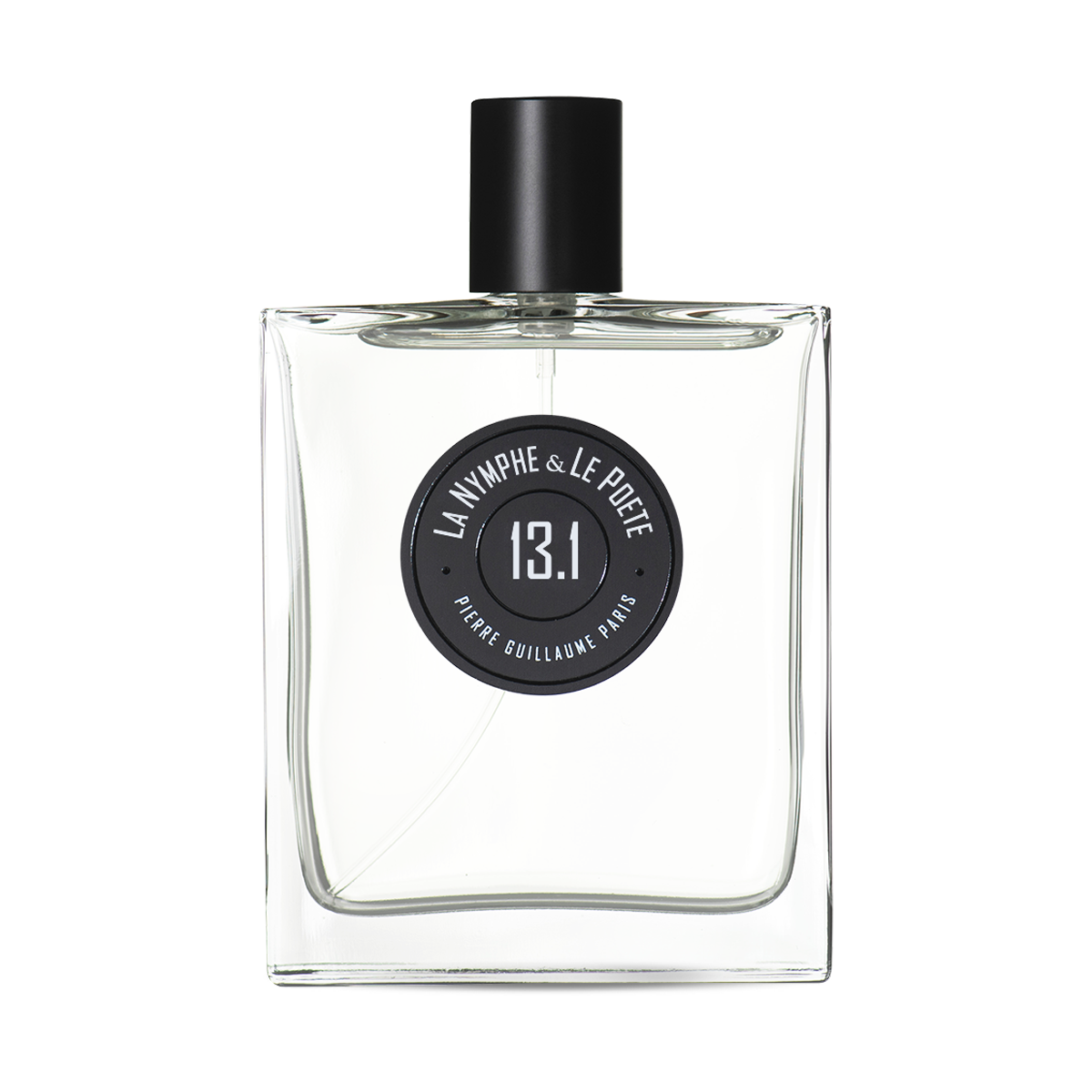
La Nymphe & le Poète belongs to the house’s theme 13 “Rose(s)”, opened in 2003 by Brûlure de Rose. Presented in a winter collection placed under the sign of poetry, romanticism and tenderness, it draws on the romantic sensibility of the early 19th century, that moment when the expression of feelings, up to the passions, set Europe ablaze.
The name evokes an imaginary idyll between the nymph Erato, muse of lyric poetry, and the German poet Novalis. The fragrance reads like a scene: lying in the shade of an orange tree, embracing his muse, the poet holds an old rose in his clenched fist, a chalice of tea-rose.
The perfume’s singularity lies in an original material: tea-rose leaf absolute, whose complex greenness answers the ambery warmth of cistus branches. Citrus opens the composition, rose and orange wood form its heart, peach blossom and cistus darken its base with a resinous caress.
Less unisex than other house creations, La Nymphe & le Poète embraces a romantic, feminine, delicate and sophisticated character, faithful to the spirit of its literary inspiration.
Fragrance notes
La Nymphe & le Poète unfolds in three movements, from the greenness of tea-rose to resinous cistus.
The thread is the tea-rose: a green, leafy rose, warmed by cistus.
Scent profile
La Nymphe & le Poète is a green rose rather than a candied one. Tea-rose leaf absolute gives it a singular greenness, citrus a fresh opening, and orange wood a clear heart that keeps the perfume away from heavy, heady roses.
Its signature is the dialogue between this floral greenness and the ambery warmth of cistus, which darkens the base with a resinous, sensual note. It is a romantic, delicate rose, to wear in mid-season as in winter.
The world must be romanticised.Novalis (1772-1802)
Key characteristics
When and where to wear
La Nymphe & le Poète is a mid-season and winter rose, at its best in autumn and spring. Its greenness makes it wearable by day, while cistus gives it warmth in cold weather.
How to wear it
Seasonal fit
| Season | Fit | Critical notes |
|---|---|---|
| Spring | ★★★★ | The tea-rose greenness blooms. |
| Summer | ★★★☆ | Fresh if applied lightly. |
| Autumn | ★★★★ | Cistus warms the rose. |
| Winter | ★★★☆ | Soft and resinous. |
Context fit
| Setting | Fit | Recommended use |
|---|---|---|
| Everyday | ★★★★ | Reference use. |
| Outings | ★★★★ | Romantic and sophisticated. |
| Office | ★★★☆ | If the trail stays measured. |
| Evening | ★★★★ | Elegant and tender. |
| Sport | ★★☆☆ | Too floral for exertion. |
Similar perfumes
Pierre Guillaume’s green rose belongs to the lineage of his theme 13.
| Perfume | House · year | Why it is close |
|---|---|---|
| Brûlure de Rose 13 | Pierre Guillaume Paris · 2003 | The first opus of theme 13, a metallic, ambery rose, of which La Nymphe & le Poète offers a greener, more romantic reading. |
| Métarosme 13.2 | Pierre Guillaume Paris · 2026 | The theme’s following variation, a mineral, woody rose, another exploration of the flower by the house. |
Frequently asked questions
See also
Sources
- Official press kit, La Nymphe & le Poète 13.1 · Pierre Guillaume Paris
- Pierre Guillaume Paris catalogue 2025–26 (English edition)
- Pierre Guillaume Paris, official site