Quick answers
History
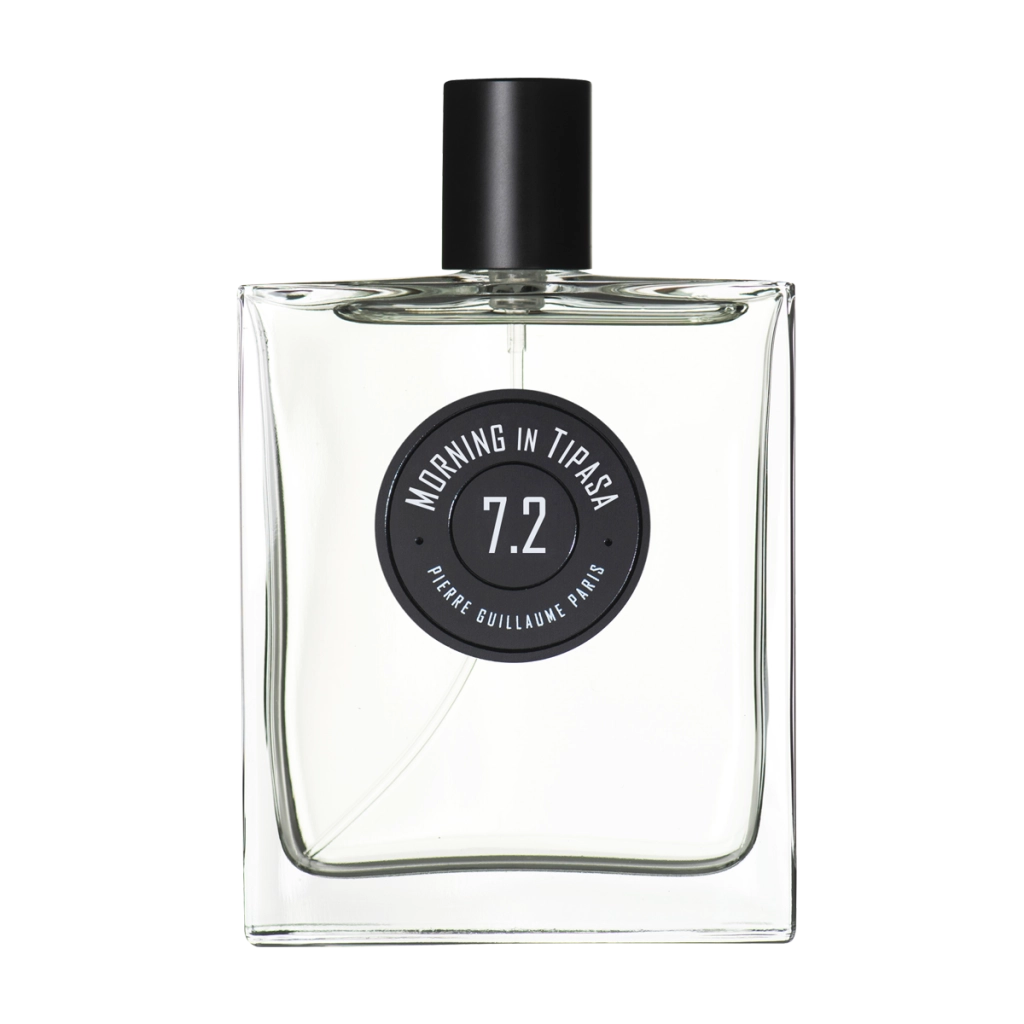
Morning in Tipasa completed Pierre Guillaume’s theme 7, the theme of hesperides, in 2021, alongside Solsekia 7 and Grand Siècle Intense 7.1. The three perfumes form a trilogy on the light of citrus, of which Morning in Tipasa is the most literary and most saline panel.
The inspiration is a text: Wedding in Tipasa (1938) by Albert Camus, one of the perfumer’s favorites, in which the author depicts the summer, the rites of youth and the sea below the Roman ruins. Camus’ words, Pierre Guillaume says, resonate in his head and his mind wanders among the remains, listing the Algerian flora.
The composition translates this landscape into materials. Bergamot and wild lemongrass open the perfume on an aromatic hesperidic light, peppermint and Mediterranean pine fill out the heart with a vegetal, resinous freshness, then jujube tree honey lays down a soft, balmy base, like Camus’ “sun-blackened countryside”. A saline accord evokes the dive into the water from the rocks.
The name comes from the Algerian coastal city, whose name means “place of passage” or “stopover”. Against the full sun of Solsekia and the powdery chypre of Grand Siècle Intense, Morning in Tipasa is the aromatic, marine panel of theme 7, a seaside citrus steeped in literature.
Fragrance notes
Morning in Tipasa brings together bergamot and wild lemongrass on top; peppermint and Mediterranean pine at the heart; jujube tree honey and a saline accord in the base.
The thread is the hesperidic, carried from the vegetal aromatic to a marine balm, like a summer morning in Tipasa.
Scent profile
Morning in Tipasa is an aromatic hesperidic rather than a classic cologne. Pierre Guillaume carries the citrus toward the herbal and the marine: wild lemongrass, peppermint and Mediterranean pine give it a vegetal freshness, while a saline accord and jujube tree honey lay down a balmy, almost solar base. It is a seaside citrus, bracing and luminous.
Its signature lies in this evolution from green to balm, from the morning dive to skin dried in the sun. The trail stays clean and fresh, which makes it a highly wearable hesperidic, ideal in strong heat, perfectly unisex, and more inhabited than most niche citruses thanks to its Camusian inspiration.
Diving into the water from the rocks, one morning in Tipasa.Pierre Guillaume Paris, catalogue 2025-26
Key characteristics
When and where to wear
Morning in Tipasa is a high-summer hesperidic, whose lemongrass and mint keep the freshness alert in strong heat. Jujube tree honey and pine nonetheless give it enough hold for mid-season and seaside days.
How to wear it
Seasonal fit
| Season | Fit | Critical notes |
|---|---|---|
| Spring | ★★★★ | The aromatic freshness awakens. |
| Summer | ★★★★ | Ideal season for its marine air. |
| Autumn | ★★★☆ | Jujube tree honey warms it. |
| Winter | ★★☆☆ | A touch fresh in deep cold. |
Context fit
| Setting | Fit | Recommended use |
|---|---|---|
| Everyday | ★★★★ | Reference use. |
| Holidays | ★★★★ | Its marine ground. |
| Office | ★★★★ | Clean, fresh and discreet. |
| Open air | ★★★★ | Bracing and luminous. |
| Sport | ★★★☆ | Light and lively. |
Similar perfumes
Pierre Guillaume’s marine hesperidic speaks first to its theme-7 twins, then to the great aromatic citruses of perfumery.
| Perfume | House · year | Why it is close |
|---|---|---|
| Solsekia 7 | Pierre Guillaume Paris · 2021 | The solar opus of the hesperidic trilogy, Mexican orange tree and chili pepper over a driftwood base. The same Mediterranean light, but spiced where Morning in Tipasa is herbal and saline. |
| Colonia | Acqua di Parma · 1916 | The reference Italian aromatic hesperidic; the same lemony clarity, but Morning in Tipasa adds mint, pine and salt in a literary reading. |
Frequently asked questions
See also
Sources
- Pierre Guillaume Paris catalogue 2025–26 (English edition)
- Pierre Guillaume Paris, official Morning in Tipasa page