Quick answers
History
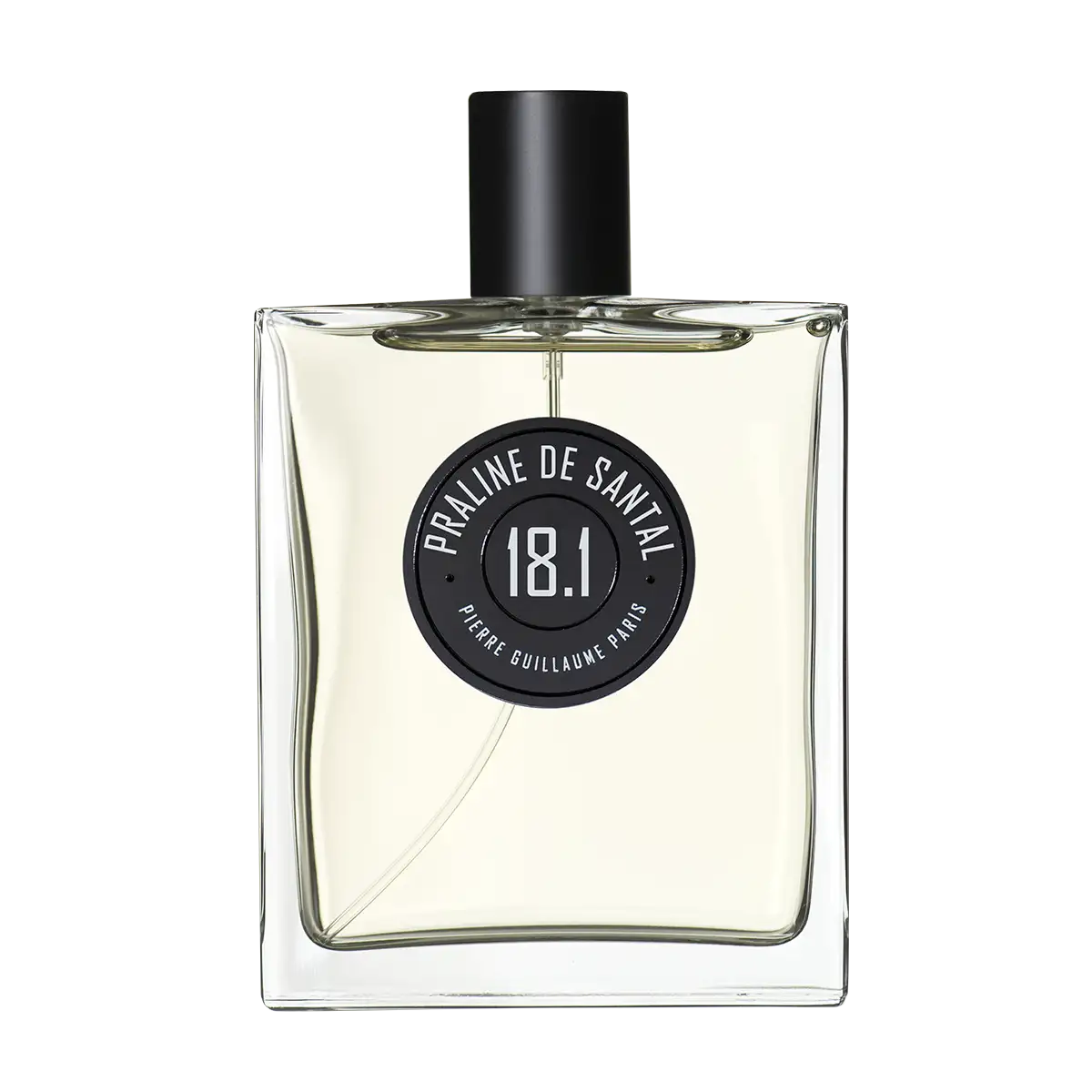
Praliné de Santal is the second proposal of theme 18 “Sandalwood”, opened by Pierre Guillaume in 2007 with Cadjmère, a creamy woody. The idea was born in 2009, at the height of the perfumer’s “Dark Gourmand” period, during an in-store meeting: a customer challenged him to make a sandalwood-hazelnut, but with no sweetness. Amused by the pairing, Pierre Guillaume took up the dare.
The result is a sandalwood both monolithic in its proportions and ethereal in its evolution, tenderly powdery, lifted by a just-roasted hazelnut. At the heart, the perfumer relies on the powdery strength and diffusive power of heliotrope to space out the notes: the accord gains in volume and lightness, sandalwood stays omnipresent without collapsing.
In the base, cedar wood stiffens the sandalwood and gives it verticality, while fleur de sel lends it a driftwood air and definitively neutralises any hint of sweetness. The name itself settles the question: “praliné”, not “praline”, the accord of hazelnut and sandalwood taken in a very French key.
Launched as a limited edition in 2011, the fragrance sold out within days; “collector” bottles soon appeared on the second-hand market, and requests for its return continued for over a decade, until the house reissued it.
Fragrance notes
Praliné de Santal unfolds in three movements, from roasted sandalwood to mineral salt.
The thread is the refusal of sugar: fleur de sel neutralises any gourmand and sets the sandalwood upright.
Scent profile
Praliné de Santal is a gourmand woody without an ounce of sugar. Roasted hazelnut and heliotrope give a praline impression, but fleur de sel cuts the sweetness clean: it stays in the wood, never the dessert.
Its signature is the verticality of the sandalwood. Where many sandalwoods sag into creaminess, this one stands upright thanks to cedar and salt, in a powdery, ample and original trail, faithful to the “Dark Gourmand” period that forged the house style.
A sandalwood both monolithic in its proportions and ethereal in its evolution.Pierre Guillaume Paris, press kit
Key characteristics
When and where to wear
Praliné de Santal is a cool-weather woody, at its best in autumn and winter. Salt and cedar keep it clean and wearable, where sandalwood alone might feel heavy.
How to wear it
Seasonal fit
| Season | Fit | Critical notes |
|---|---|---|
| Spring | ★★★☆ | The sandalwood lightens. |
| Summer | ★★☆☆ | A little warm in the sun. |
| Autumn | ★★★★ | Its season. |
| Winter | ★★★★ | The wood reaches its full breadth. |
Context fit
| Setting | Fit | Recommended use |
|---|---|---|
| Everyday | ★★★★ | Reference use. |
| Office | ★★★★ | Clean and powdery. |
| Dinner | ★★★★ | Warm without sugar. |
| Evening | ★★★☆ | Elegant and woody. |
| Sport | ★★☆☆ | Too dense for exertion. |
Similar perfumes
Pierre Guillaume’s salted sandalwood belongs to the lineage of his “Dark Gourmand” woods.
| Perfume | House · year | Why it is close |
|---|---|---|
| Cadjmère 18 | Pierre Guillaume Paris · 2007 | The first opus of theme 18, a creamy, maternal sandalwood, of which Praliné de Santal is the roasted, salted rereading. |
| Sucre d’ébène | Pierre Guillaume Paris · 2010 | A musky woody from the same period, gourmand yet unsweet, sharing this balmy, dark aesthetic. |
Frequently asked questions
See also
Sources
- Official press kit, Praliné de Santal 18.1 · Pierre Guillaume Paris · “In the heart, the perfumer uses the powdery strength […] of heliotrope”, then “In the base notes, Cedarwood stiffens the sandalwood and gives it verticality, while Fleur de Sel gives it a driftwood air”
- Pierre Guillaume Paris catalogue 2025–26 (English edition)
- Pierre Guillaume Paris Company Profile (“Dark Gourmand” period)
- Pierre Guillaume Paris, official site