Quick answers
History
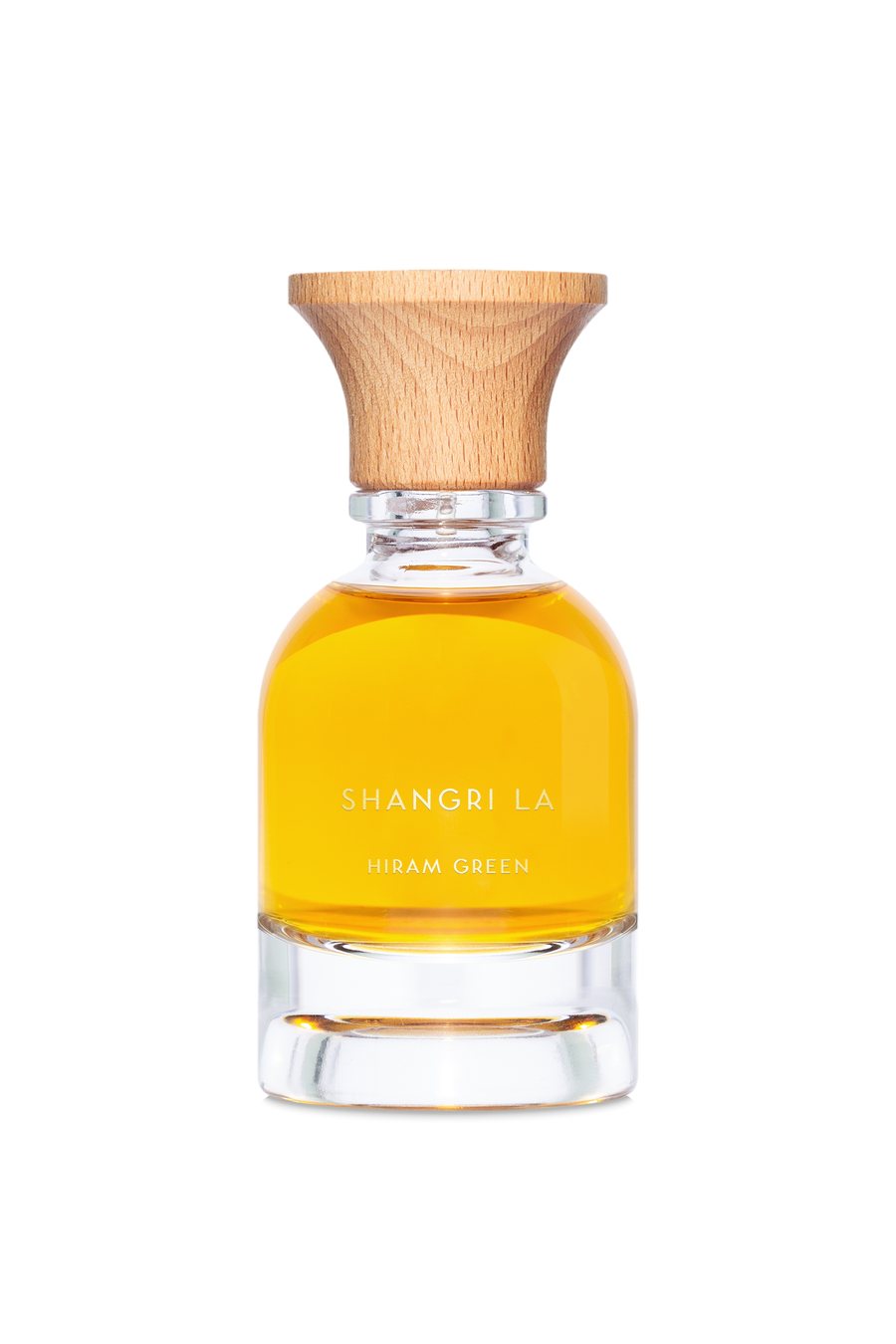
Shangri La takes its name from the imaginary land of James Hilton’s novel Lost Horizon (1933) : a mythical Himalayan utopia, an isolated earthly paradise where people live almost immortal. Hiram Green makes it a contemporary interpretation of a classic chypre, a bright, airy perfume with a lush, exotic character, composed entirely from natural materials and made by hand in Gouda, the Netherlands.
The original Shangri La was released in 2014 as the follow-up to Moon Bloom, the house’s very first perfume. It opens on a tart trio of lemon, orange and bergamot, before a rich bouquet of peach, jasmine, iris, rose, cinnamon and warm spices ; an earthy base of vetiver and oakmoss closes the chypre accord. Production of that first version was, however, stopped in 2018.
In 2022, the house reissued Shangri La in an updated edition, lighter and warmer than the original, with more floral and spicy notes. The oakmoss, though, could not be increased : it already sat at the maximum allowed by regulation. This 2022 edition is the version of the perfume available today.
Olfactory pyramid
The house gives a palette of materials rather than a formal pyramid. The layering below follows the progression described in the press kit and on the official site, from the citrus opening to the woody, oakmoss base.
The movement runs from citrus brightness to an earthy base. Ripe, soft peach rounds out the flowers and softens the cinnamon, while the contrast between the fresh opening and the oakmoss traces the very architecture of the chypre.
Olfactory profile
The olfactory profile of Shangri La is a bright, airy fruity chypre, at once lush and exotic. It is a contemporary reading of a classic genre : the citrus opening lights up a fruity, spicy heart before vetiver and oakmoss anchor the composition in an earthy depth. The natural materials give it a living, vibrant texture.
The distinctive signature lies in its lineage and its transformation : a follow-up to Moon Bloom in 2014, discontinued in 2018 and reissued in 2022 in a lighter, warmer version, Shangri La shows how the house reworks its formulas over time, always composing at the slow pace that natural materials demand.
A contemporary interpretation of a classic chypre, inspired by the beauty of utopia.
Key characteristics
When and where to wear
Shangri La is a bright, versatile chypre, for those who love fresh fruit set against a woody base. Its airy lightness makes it an easy daytime perfume, with oakmoss and vetiver bringing depth as the fragrance dries down.
Seasonal fit
| Season | Fit | Notes |
|---|---|---|
| Spring | ★★★★ | The citrus opening and fruity heart are at their best. |
| Summer | ★★★★ | Bright and airy, the chypre stays fresh in warm weather. |
| Autumn | ★★★☆ | Cinnamon and spices warm the season well. |
| Winter | ★★★☆ | The vetiver and oakmoss base carries, despite the overall lightness. |
By context, it suits everyday wear and bright, sunny days alike, and is worn by men and women who love chypre in its fruity, luminous form.
Similar perfumes
| Perfume | House · year | Why it is close |
|---|---|---|
| Mitsouko | Guerlain · 1919 | The peach chypre, the absolute reference of the genre. |
| Femme | Rochas · 1944 | A fruity chypre of plum and moss, the same architecture. |
| Hyde | Hiram Green · 2018 | Shares the oakmoss of the base, another natural material from the house. |
| Moon Bloom | Hiram Green · 2013 | The perfume that Shangri La followed up in 2014. |
Common questions
See also
Sources
- Hiram Green · official press kit, "Fact Sheet – Shangri La" (family, notes, key materials, inspiration, genealogy)
- Hiram Green, official Shangri La page (Eau de Parfum, 50 ml, natural composition, updated edition)
- Fragrantica, Shangri La entry (2014 release, notes, cross-confirmation)
- Parfumo, Hiram Green catalogue (cross-confirmation)