Quick answers
History
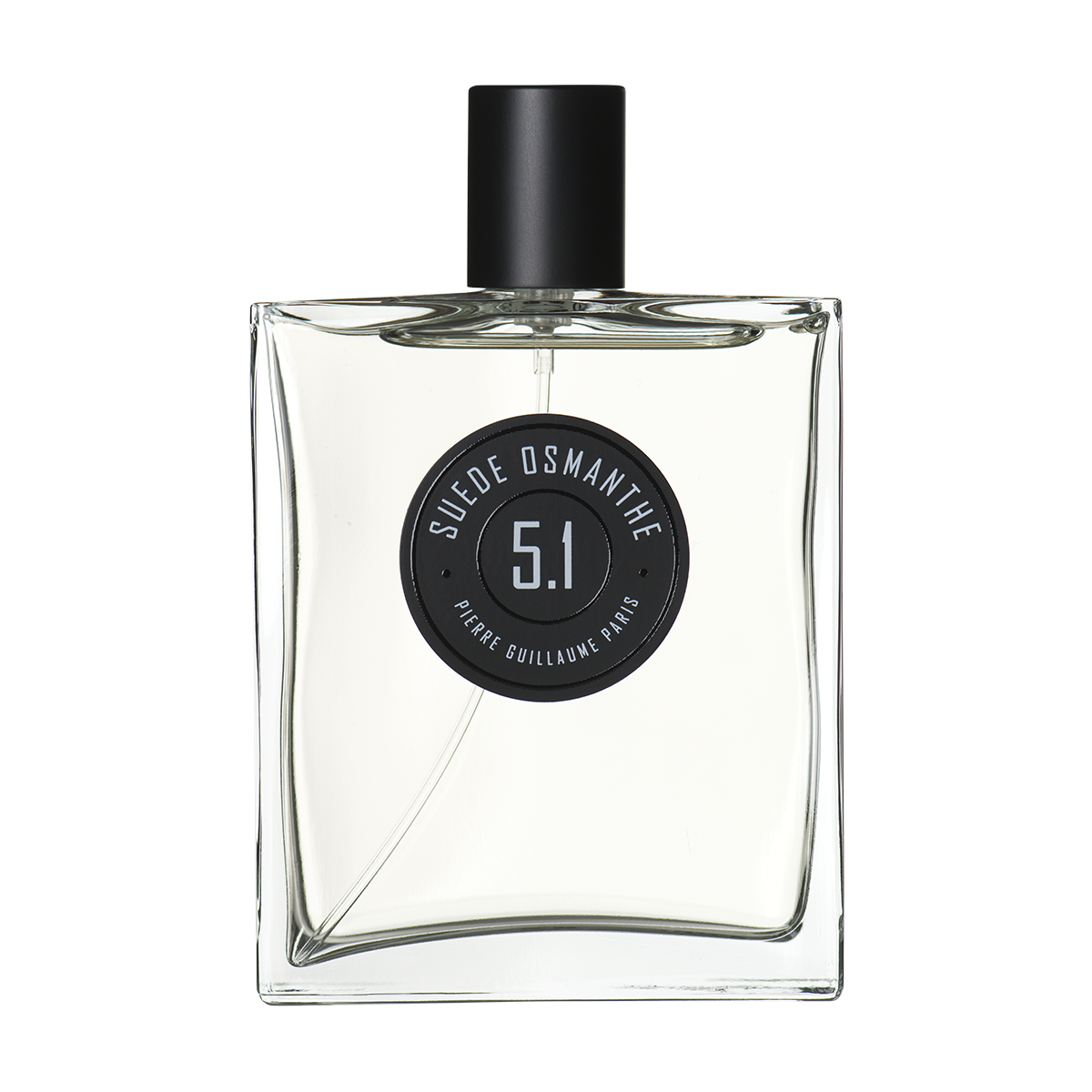
Suède Osmanthe belongs, in 2017 to Pierre Guillaume’s theme 5, the theme of osmanthus, whose founding opus is L’Eau de Circé 05 (2005). Twelve years later, the perfumer takes up this Asian flower, with its scent of apricot and leather, but with a radical choice: not to use any of it.
The feat lies there. Osmanthus is not used as a material; its fruity, floral and leathery accents are evoked by a game of chimeras, that is, accords that reconstruct its effect without using the material. Aldehydes, black tea leaves, suede and apricot draw the flower in negative, and it shines by its absence.
The composition sets up a tenderly leathered floral. Aldehydes give the top its glow, black tea brings its smoky, tannic facet, apricot the fruity roundness of osmanthus, and suede, the central material, lays down a thin, delicate leather, a precious skin rather than a raw hide. The whole is soft and powdery, at once floral and animalic.
The name sums up the gesture: a precious suede, a thin skin, playing with the olfactory illusion of an osmanthus. Suède Osmanthe is a conceptual as much as a sensory variation, where Pierre Guillaume proves that a flower can be painted without being named, ten years after opening theme 5 with L’Eau de Circé.
Fragrance notes
Suède Osmanthe brings together aldehydes and black tea leaves on top; osmanthus, evoked, apricot and suede at the heart; musks and cashmeran in the base.
The thread is osmanthus by illusion, drawn in negative by apricot, tea and suede.
Scent profile
Suède Osmanthe is a fruity leather rather than a dark one. Pierre Guillaume paints osmanthus without using any: aldehydes, apricot and black tea reconstruct its scent, suede lays down a thin, precious skin. It is a tenderly leathered floral, powdery and soft, where leather is a caress rather than a raw material.
Its signature lies in this game of illusion: the flower shines by its absence, evoked by olfactory chimeras. The trail is soft and close to the body, at once floral and animalic, which makes it a unisex leather, elegant and easy to wear, more subtle than most niche leathers thanks to its conceptual construction.
A precious suede, a thin and delicate skin, playing with the illusion of an osmanthus conspicuous by its absence.Pierre Guillaume Paris, catalogue 2025-26
Key characteristics
When and where to wear
Suède Osmanthe is a mid-season leather, whose apricot and tea keep the freshness alert, while suede and musks give it a soft hold. Its powdery base makes it wearable all year, with particular ease in autumn.
How to wear it
Seasonal fit
| Season | Fit | Critical notes |
|---|---|---|
| Spring | ★★★★ | Aldehydes and apricot bloom. |
| Summer | ★★★☆ | Suede can weigh in the heat. |
| Autumn | ★★★★ | Ideal season for its fruity leather. |
| Winter | ★★★☆ | Suede envelops in cold weather. |
Context fit
| Setting | Fit | Recommended use |
|---|---|---|
| Everyday | ★★★★ | Reference use. |
| Dates | ★★★★ | Soft, elegant leather. |
| Office | ★★★★ | Discreet and close to the body. |
| Evening | ★★★★ | Sensual and powdery. |
| Sport | ★★☆☆ | Too dressed for exertion. |
Similar perfumes
Pierre Guillaume’s leather speaks first to the founding opus of its theme, then to the great leathered osmanthus of niche perfumery.
| Perfume | House · year | Why it is close |
|---|---|---|
| L’Eau de Circé 05 | Pierre Guillaume Paris · 2005 | The founding opus of theme 5, an oriental floral of osmanthus, rose and apricot. Where L’Eau de Circé names the flower, Suède Osmanthe paints it in negative, ten years later, through a game of chimeras. |
| Osmanthe Yunnan | Hermès · 2005 | Niche perfumery’s reference osmanthus, tea and apricot, by Jean-Claude Ellena; the same flower-tea marriage, but Suède Osmanthe adds suede leather and the illusion of absence. |
Frequently asked questions
See also
Sources
- Pierre Guillaume Paris catalogue 2025–26 (English edition)
- Pierre Guillaume Paris, official Suède Osmanthe page