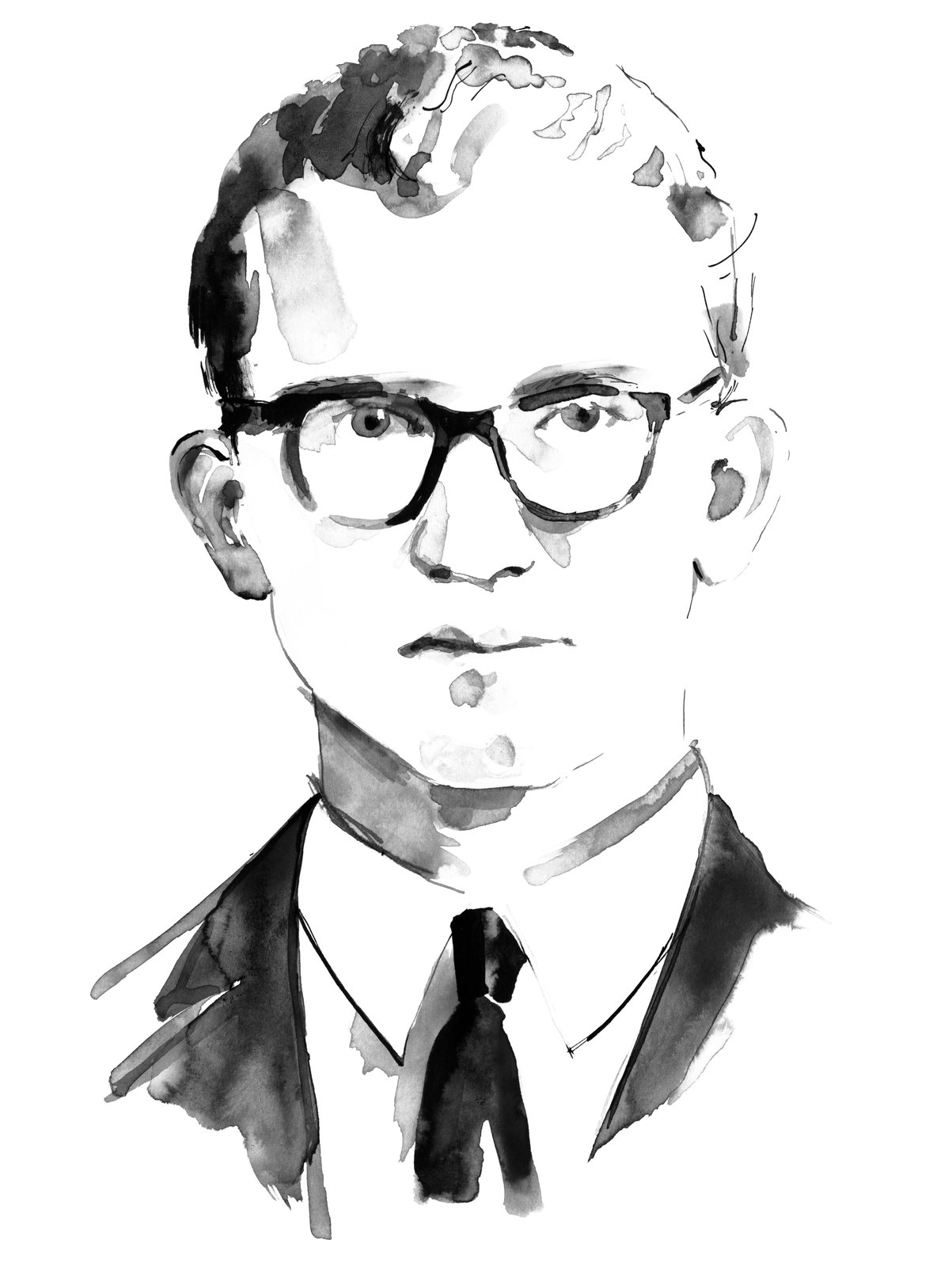
Quick answers
Biography and dynasty
Jean-Paul Guerlain was born on 9 October 1937 in Neuilly-sur-Seine (France), the great-grandson of Pierre-Francois-Pascal Guerlain, founder of the Guerlain house in Paris (France) in 1828. He belongs to the fourth generation of family perfumers at Guerlain, after his great-grandfather Pierre-Francois-Pascal, his great-uncle Aime, composer of Jicky (1889), and his grandfather Jacques Guerlain, composer of L’Heure Bleue (1912), Mitsouko (1919) and Shalimar (1925).
His perfumery training took place inside the family laboratory rather than at a school. Jean-Paul began working alongside his grandfather Jacques in the early 1950s and contributed to Ode (1955), the last composition signed by Jacques. Jacques continued to mentor him on Chant d'Aromes (1962), the year before his death. This direct transmission from grandfather to grandson is unusual in the modern industry and gave Jean-Paul a continuous fluency in the Guerlinade vocabulary without any intermediary teacher.
Jean-Paul Guerlain became in-house perfumer of the family house in 1955 at the age of eighteen and held the role continuously for forty-seven years. He signed his first major composition, Vetiver, in 1959, then Chant d'Aromes alongside Jacques in 1962. The 1960s established his reputation as a leading French perfumer of his generation, with Habit Rouge (1965) and Chamade (1969) entering the Guerlain catalog within four years of each other.
Beyond composition, Jean-Paul Guerlain also took on management duties at Guerlain. He served as chairman of the company from 1988 to 1996 and was associated with the international expansion of the house in the years preceding its 1994 acquisition by LVMH. He stepped down from the in-house perfumer role in 2002, and was succeeded officially by Thierry Wasser in 2008, the first non-family perfumer at the head of Guerlain composition since 1828. Jean-Paul Guerlain retains the title of honorary perfumer of the house.
Olfactory signature
The olfactory signature of Jean-Paul Guerlain extends and modernizes the Guerlinade established by his grandfather Jacques. He inherited a stable accord built on bergamot, rose, jasmine, iris, tonka bean and vanilla, and used it as a continuous base while exploring families that Jacques had touched less often. His personal mark on the family signature is twofold: a sustained attention to vetiver as a masculine base material, and a willingness to push the oriental amber tradition into more contemporary territory.
His masculine compositions form the most coherent body within his catalog. Vetiver (1959) treats the eponymous root as the central character rather than a base accessory, and is widely cited as one of the founding fougere-vetiver references of the twentieth century. Habit Rouge (1965) takes the Guerlinade structure and pushes it toward a hesperidic-oriental register, and is often described in English-language reference sources as one of the first oriental compositions designed for men. Derby (1985) and Heritage (1992) complete this masculine arc, the second built around bergamot, lavender and a vanilla-tonka base inherited from the family accord.
His feminine signature explores rose and oriental amber. Chamade (1969) is a green floral structured around hyacinth, blackcurrant bud and a powdery base. Nahema (1979) is built as a tribute to the rose, composed with the assistance of Anne-Marie Saget and described by reference sources as one of the densest rose compositions of the late twentieth century. Samsara (1989), also co-composed with Saget, marked a high-profile launch built on a generous accord of sandalwood and jasmine, and remains one of the best-selling feminine references of the late 1980s.
Jean-Paul Guerlain composed across half a century inside the same family vocabulary, treating each new launch as a continuation of the Guerlinade rather than a break from it.
Key characteristics
Notable perfumes
The catalog of Jean-Paul Guerlain spans nearly five decades, from his early work alongside his grandfather to his final compositions in the early 2000s. The selection below lists eight founding perfumes whose launch year and attribution are cross-checked against a specialist perfume site and Now Smell This.
| Year | House | Perfume | Accord |
|---|---|---|---|
| 1959 | Guerlain | Vetiver | Woody, fougere |
| 1962 | Guerlain | Chant d'Aromes | Floral chypre |
| 1965 | Guerlain | Habit Rouge | Hesperidic oriental |
| 1969 | Guerlain | Chamade | Green floral |
| 1979 | Guerlain | Nahema | Floral, rose |
| 1985 | Guerlain | Derby | Aromatic chypre |
| 1989 | Guerlain | Samsara | Oriental, sandalwood |
| 1992 | Guerlain | Heritage | Aromatic fougere |
Legacy
The legacy of Jean-Paul Guerlain lies in the continuity he ensured between the historical Guerlain catalog and the contemporary one. He was the last family member to hold the in-house perfumer role at Guerlain, closing a chain of family transmission that had run unbroken since 1828. Vetiver, Habit Rouge and Samsara are still produced today and continue to anchor the masculine and oriental segments of the Guerlain catalog.
His transmission role inside the house was equally significant. He mentored several younger perfumers who later signed major compositions, including Mathilde Laurent, who completed an internship with him in the early 1990s, stayed at Guerlain for eleven years and went on to join Cartier as in-house perfumer in 2005. This in-house training tradition, inherited from his own apprenticeship with Jacques, is one of the rare cases of direct master-to-apprentice transmission preserved in twentieth-century industrial perfumery.
Beyond the family circle, the example of Jean-Paul Guerlain shaped the contemporary independent house model. His insistence on a recognizable house accord carried through five decades of composition anticipated the way later artistic perfume houses would build catalogues around a single authorial voice. Independent perfumers and houses operating today within niche perfumery, from Andy Tauer to Vero Kern to Lorenzo Villoresi, operate inside a tradition of one-author continuity that Jean-Paul Guerlain embodied for the last family generation at one of the oldest French perfume houses.
Frequently asked questions
Six questions that come up repeatedly about Jean-Paul Guerlain and his role in twentieth-century French perfumery, with their factual answers.
See also
Four Osmetheca resources to extend the reading on Jean-Paul Guerlain, the Guerlain dynasty and twentieth-century French perfumery.
Sources
- Wikipedia: Jean-Paul Guerlain, full article (accessed 24 May 2026)
- Guerlain: perfumery archives
- Fragrantica: Jean-Paul Guerlain, nose profile and catalog (accessed 24 May 2026)
- Now Smell This: Jean-Paul Guerlain, perfumer profile (accessed 24 May 2026)
- Wikiparfum: Jean-Paul Guerlain, perfumer profile (accessed 24 May 2026)
- Wikipedia: Guerlain, family transmission and Thierry Wasser succession (accessed 24 May 2026)