Quick answers
History
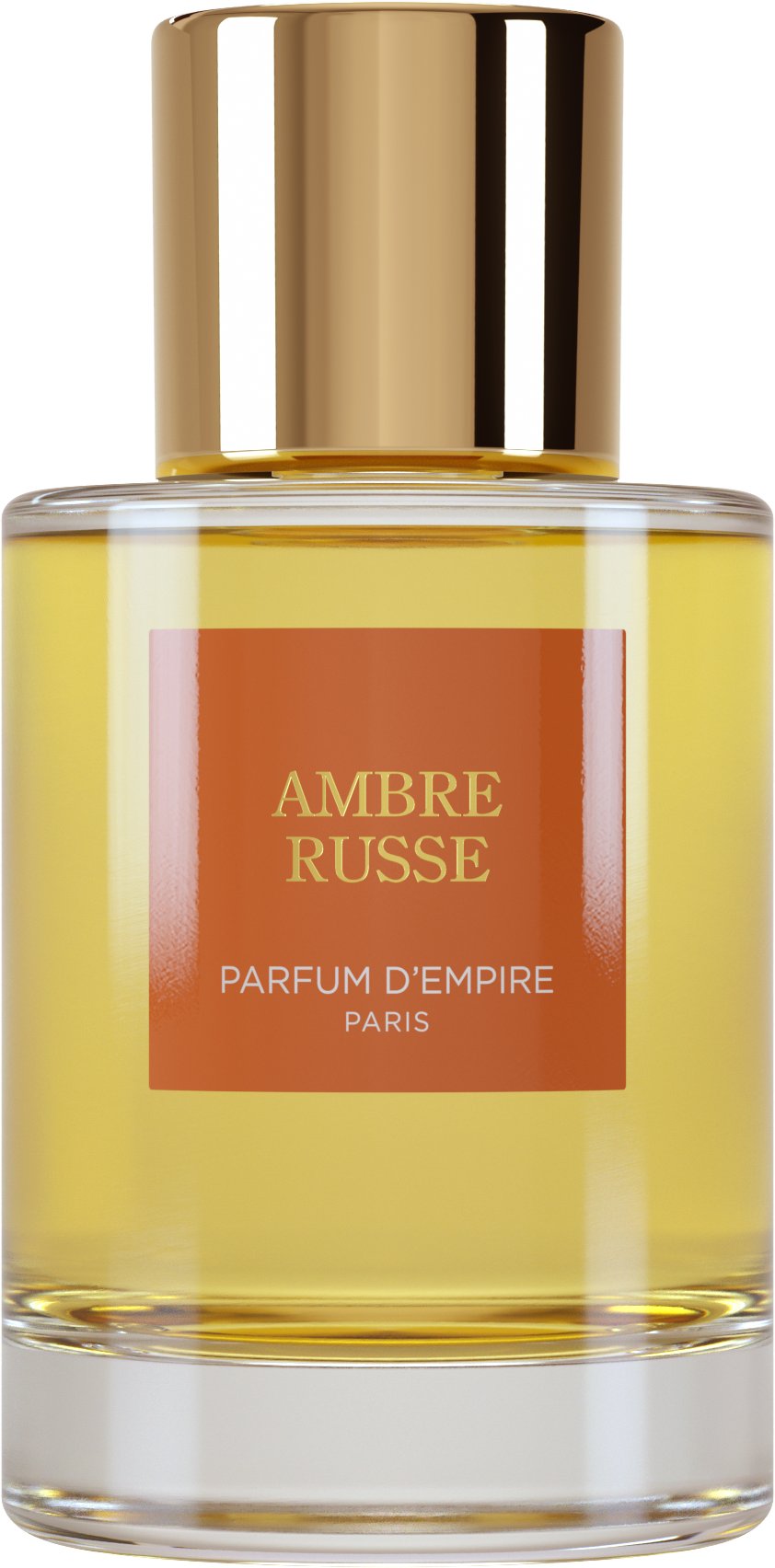
Ambre Russe was launched in 2005, per the press kit issued by the house, by Parfum d'Empire, the French niche house founded in 2003 in Paris (France) by Marc-Antoine Corticchiato. Corticchiato is a perfumer of Corsican origin who holds a doctorate in chemistry and trained at ISIPCA in Versailles (France). The house was conceived as an author-driven project anchored in great imperial civilizations: Rome, France, Russia.
The brief was narrative and explicit. Corticchiato set out to translate nineteenth-century imperial Russia into a wearable composition: the orthodox churches with their incense, the samovars brewing tea all day, the smoked leather of military boots, the iced vodka served between courses, and the spiced traditions of Crimean tobacco and birch tar. The choice of vodka and champagne as top notes is among the most distinctive in modern niche perfumery; the materials are rare in the discipline and reconstructed olfactively rather than literally distilled.
The composition sits inside what Parfum d'Empire calls its imperial line, a catalogue that grew over the following two decades to include Cuir Ottoman (2006), Iskander (2006) and Eau Suave (2005). Ambre Russe remains one of the longest-standing best sellers of the house and continues to be marketed in its original 2005 formulation through Parfum d'Empire boutiques and partner niche retailers.
Marc-Antoine Corticchiato is one of the few contemporary perfumers to combine a scientific background with full author authority on a house catalogue. His chemistry training is visible in the precision of his reconstructions, and Ambre Russe is one of the most ambitious examples of that method in his catalogue. The composition installed Parfum d'Empire as one of the defining voices of contemporary French niche perfumery.
Olfactory pyramid
The architecture of Ambre Russe runs from a sparkling boozy opening to a warm spiced heart and a resinous ambery drydown. The pyramid below follows the documented notes on the official Parfum d'Empire site, cross-checked against Kafkaesque.
Evolution on skin is dramatic and narrative. The opening reads cold and sparkling for the first thirty minutes, almost medicinal in feel. The spiced leather heart takes over within the hour and dominates for several hours. The amber-incense-musk drydown then settles for the long haul and can last beyond twelve hours, with the smoky leather facet still legible past the eighth hour.
Composition
The composition of Ambre Russe rests on three structural decisions. The first is the choice of vodka and champagne as top notes, a pairing almost unheard of in early 2000s niche output. Corticchiato reconstitutes these spirits olfactively rather than distilling them, building a cold sparkling accord that contrasts sharply with the warm amber drydown. The boozy opening is short-lived but distinctive; it functions as a signature gesture more than as a structural pillar.
The second decision is the heart of Russian leather and black tea, lifted by cinnamon, coriander, birch and juniper. Russian leather is itself a perfumery convention rather than a single material, traditionally referencing the smoky birch-tar cuirs developed in eighteenth-century Russia for military boots. Coupled with the smoky tea note, it gives Ambre Russe its narrative density and ties the composition to imperial Russian iconography without falling into pastiche.
The third decision is the resinous ambery base. Amber, incense and musk anchor the composition for the long haul; the amber accord is rich without being powdery, and the incense facet stays smoky rather than sweet. The result is a balanced oriental amber: opulent in projection during the first hours, sheer and resinous in the late drydown. Critics regularly note that the perfume is denser in scent description than in actual wear, a discipline that distinguishes Corticchiato's compositions from sweeter contemporary ambers.
An opulent elixir, as passionate as the Slavic soul.Parfum d’Empire
Key characteristics
Cultural legacy
Within the contemporary niche amber category, Ambre Russe is widely cited as one of the most narratively precise compositions of the 2000s. Critics regularly highlight its imperial Russian iconography as a model of how a perfume can carry a cultural reference without reading as costume.
Its influence is felt across the broader Parfum d'Empire catalogue and beyond. The boozy reconstitution method Corticchiato used here became a recurring tool in his later compositions, and the use of cultural narrative as a structural device informed a generation of niche houses that emerged in the late 2000s. Within the same modern amber wave, Ambre Russe sits alongside Ambre Sultan by Serge Lutens (1993) and L'Air du Desert Marocain by Tauer Perfumes (2005) as a category cornerstone, while staying immediately distinguishable through its leather-and-tea heart.
Seasonal fit
| Season | Fit | Critical notes |
|---|---|---|
| Spring | ★★★☆ | Good fit on cool spring days, can feel dense in late warmth. |
| Summer | ★★☆☆ | Boozy spiced core may overwhelm in high heat, dose with restraint. |
| Autumn | ★★★★ | Reference season, the spiced leather signature lands best in cool air. |
| Winter | ★★★★ | Outstanding in cold conditions, the amber base anchors beautifully. |
Similar perfumes
| Perfume | House · year | Why related |
|---|---|---|
| Ambre Sultan | Serge Lutens · 1993 | Foundational modern amber by Christopher Sheldrake, same category cornerstone status. |
| L'Air du Desert Marocain | Tauer Perfumes · 2005 | Dry incense oriental signed by Andy Tauer, sharing the resinous ambery architecture. |
| Cuir Ottoman | Parfum d'Empire · 2006 | Same house and same imperial narrative method, leather-anchored variation. |
| Chergui | Serge Lutens · 2001 | Honey-tobacco oriental, shares the boozy spiced register of Ambre Russe. |
| Tobacco Vanille | Tom Ford · 2007 | Contemporary gourmand oriental, reads as a sweeter cousin of the Ambre Russe spiced amber. |
When and where to wear
Ambre Russe reveals itself best in cool conditions and dressed settings. The spiced leather heart lands with full narrative density between 0 and 18 °C, and the amber-incense drydown anchors the composition through the evening.
Wear references
Context fit
| Context | Fit | Recommendation |
|---|---|---|
| Office | ★★☆☆ | Sillage can feel too present for a workplace. |
| Dressed evening | ★★★★ | Reference context. |
| Intimate dinner | ★★★★ | Preferred setting. |
| Gallery opening | ★★★★ | Outstanding. |
| Sport | ★☆☆☆ | Not suited. |
| Winter travel | ★★★★ | Outstanding. |
Frequently asked questions
Sources
- Parfum d'Empire: official product page for Ambre Russe (accessed 25 May 2026)
- Fragrantica: Ambre Russe notes pyramid and community reviews (accessed 25 May 2026)
- Parfumo: Ambre Russe reference page (accessed 25 May 2026)
- Basenotes: Ambre Russe Eau de Parfum by Parfum d'Empire (accessed 25 May 2026)
- Kafkaesque: detailed review of Ambre Russe (accessed 25 May 2026)
Content built from official Parfum d'Empire documents, received in June 2026.